
Living with chronic pain can feel like a constant battle, and the search for effective, natural relief often leads to more questions than answers. You’ve likely heard the buzz around CBD, but perhaps you feel overwhelmed by the options and unsure if it’s a legitimate solution. Is it safe? Does it actually work? And what’s the difference between CBD and THC? If you are considering using CBD oil for pain but don’t know where to begin, you have come to the right place. We understand your concerns, and we’re here to provide clarity and confidence.
It’s a common point of confusion, but they are very different products. CBD oil is extracted from the flowers, leaves, and stalks of the hemp plant, which are rich in cannabinoids that support wellness. In contrast, hemp seed oil is pressed only from the seeds and contains no CBD. While highly nutritious and rich in omega fatty acids, hemp seed oil does not offer the same potential therapeutic benefits as a quality, cannabinoid-rich CBD oil; you can learn more about what to look for in a genuine product.
This beginner’s guide is designed to be your trusted resource, cutting through the confusion with clear, science-backed information. We will walk you through exactly how CBD interacts with your body to promote comfort and reduce inflammation. You will discover what the research says, how to read a lab report, and the essential steps for choosing a pure, safe, and effective product. Our goal is to empower you on your wellness journey, helping you find the relief you deserve without any intoxicating effects.
What Is CBD Oil and How Does It Interact with the Body?
Understanding how CBD works begins with a simple definition. Cannabidiol (CBD) is one of over 100 natural compounds, known as cannabinoids, found in the hemp plant. Unlike its more famous cousin, THC, CBD is entirely non-intoxicating, meaning it does not produce a “high.” This key distinction is why many people are turning to CBD for wellness support. To create the products you see on the market, this pure CBD extract is combined with a high-quality carrier oil, like coconut or hemp seed oil. This combination, known as CBD oil, improves the body’s ability to absorb the compound, ensuring you receive its full benefits.
CBD vs. THC: Understanding the Key Difference
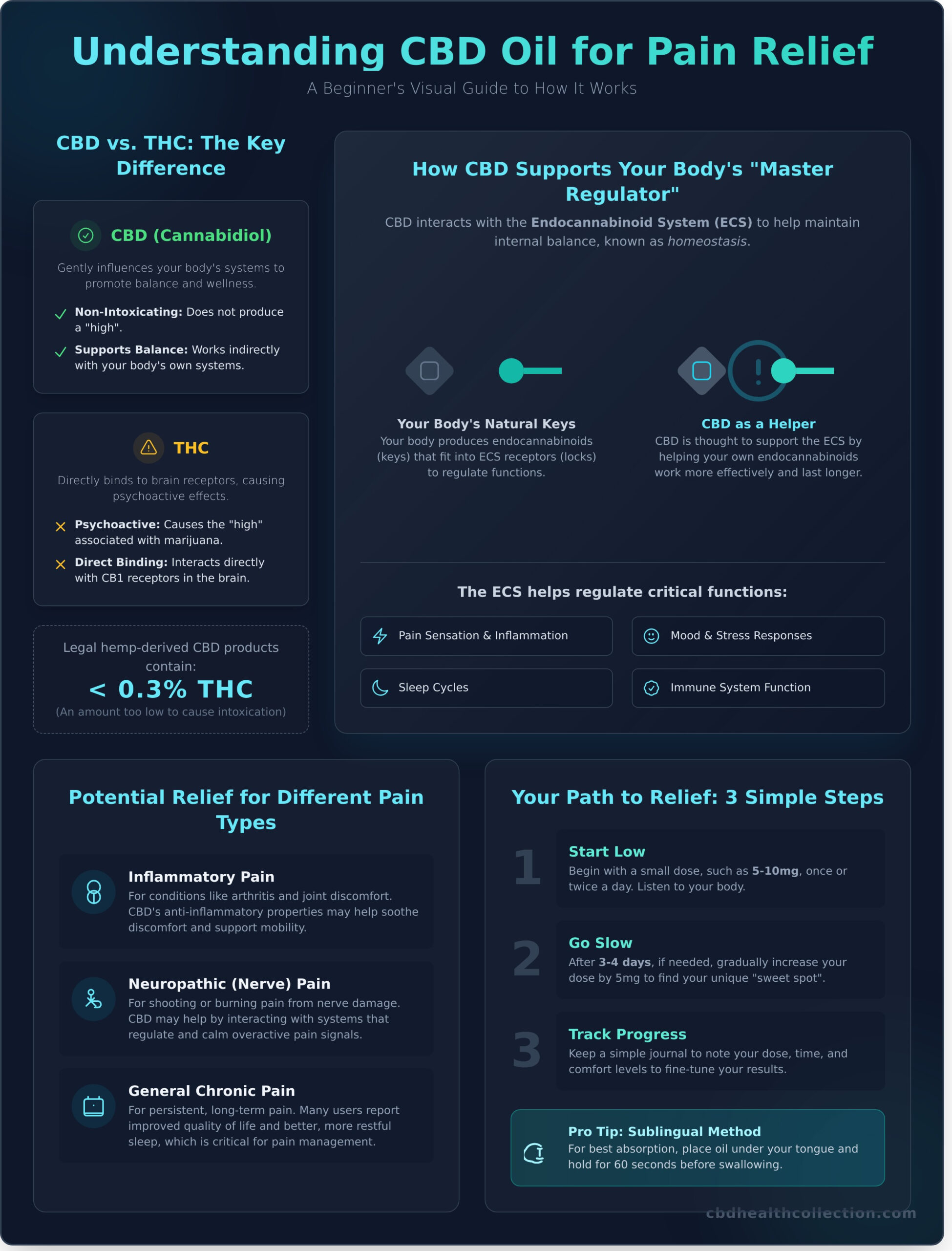
The primary difference between CBD and THC lies in how they interact with your body’s internal systems. THC directly binds to cannabinoid receptors in the brain (known as CB1 receptors), which causes the psychoactive effects associated with marijuana. CBD, on the other hand, works differently. It does not create that same bond and therefore does not cause a high. Instead, it gently influences your body’s own systems to promote balance. For your peace of mind, all legal and reputable CBD products are derived from hemp and contain less than 0.3% THC, an amount too low to have any intoxicating effect.
The Endocannabinoid System (ECS): Your Body’s Master Regulator
The reason so many people explore cbd oil for pain, sleep, and stress is due to its interaction with the Endocannabinoid System (ECS). Think of the ECS as your body’s master regulator, a complex network of receptors and signals working tirelessly to maintain a stable internal environment, or homeostasis. The ECS helps manage several critical functions, including:
- Pain sensation and inflammation
- Mood and stress responses
- Sleep cycles
- Immune system function
Sometimes, the ECS can become depleted or imbalanced. CBD is thought to support the ECS by preventing the breakdown of your body’s own endocannabinoids, allowing them to have a greater effect. Imagine your ECS receptors are locks and your body’s endocannabinoids are the keys. CBD helps ensure those keys work more effectively, helping your body return to a state of optimal wellness and comfort.
The Science of CBD for Pain Relief: What Research Suggests
As interest in natural wellness grows, many people are exploring how cbd oil for pain management fits into their routine. While research is still evolving, the existing body of scientific work is promising and provides a fascinating look into how CBD interacts with the body. The key to its potential lies in its relationship with our endocannabinoid system (ECS), a complex network that helps regulate functions like pain sensation, mood, and immune response. Instead of binding directly to main cannabinoid receptors, CBD appears to influence them indirectly, helping the body achieve a state of balance, or homeostasis.
CBD for Inflammatory Pain (e.g., Arthritis, Joint Pain)
One of the most well-studied properties of CBD is its anti-inflammatory potential. Chronic inflammation is a root cause of many types of pain, including arthritis and joint discomfort. Animal studies, such as one published in the European Journal of Pain, have shown that topical CBD application can help lower inflammation and pain-related behaviors in models of arthritis. By potentially reducing inflammatory responses in the body, CBD may help soothe discomfort and support better mobility for those with persistent joint issues.
CBD for Neuropathic (Nerve) Pain
Neuropathic pain, which stems from nerve damage, can be particularly challenging to manage. Conditions like sciatica and peripheral neuropathy cause shooting or burning sensations that are often difficult to treat. Research suggests that CBD may help by interacting with systems that regulate pain signaling. It has been observed to influence glycine receptors in the central nervous system, which play a crucial role in how we perceive nerve pain, potentially calming overactive pain signals and providing a sense of comfort.
CBD for General Chronic Pain
For those living with persistent, long-term pain, CBD is often viewed as a complementary therapy to support overall well-being. While more large-scale human trials are needed, a 2023 systematic review on CBD for pain analyzed numerous studies and highlighted its potential for improving quality of life. Many users of cbd oil for pain also report better sleep, which is a critical component of any effective pain management plan. By promoting restful sleep, CBD can help the body recover and improve a person’s ability to cope with daily discomfort.
Important Disclaimer: The information provided is for educational purposes only and is not a substitute for professional medical advice. Always consult with your doctor or a qualified healthcare provider before starting any new supplement, including CBD, to ensure it is appropriate for your individual health needs and to discuss potential interactions with any medications you are taking.
How to Use CBD Oil for Pain: A Step-by-Step Guide
Beginning your journey with cbd oil for pain can feel empowering, but it’s natural to have questions about the best way to start. Finding the right routine is a personal process, as everyone’s body chemistry is unique. However, by following a few simple, proven steps, you can confidently navigate your path toward finding comfort and balance. The goal is to create a consistent, effective wellness practice that works for you.
Finding Your Starting Dose: The ‘Low and Slow’ Method
The most trusted approach in the CBD community is to “start low and go slow.” There’s no need to rush; listening to your body is paramount. We recommend beginning with a small dose, such as 5-10mg, once or twice a day. To fine-tune your results, consider keeping a simple journal to track:
- The dose you took (in mg)
- The time of day
- Your pain and comfort levels
After 3-4 days, if you haven’t achieved your desired results, you can gradually increase your dose by 5mg. This methodical process allows you to find your unique “sweet spot” safely and effectively.
The Sublingual Method for Best Results
For tinctures and oils, the most effective way to take CBD is the sublingual method. This technique ensures maximum bioavailability, meaning your body can absorb and use more of the active compounds. It’s simple:
- Use the dropper to place your measured dose of CBD oil directly under your tongue.
- Hold the oil there for 60-90 seconds before swallowing.
By holding the oil under your tongue, the CBD is absorbed directly into the bloodstream through the mucous membranes, bypassing the digestive system. This leads to faster and more noticeable effects compared to simply swallowing it.
When to Expect Results
Patience and consistency are crucial when using cbd oil for pain. While some people report feeling effects within an hour, for many, the benefits are cumulative. The key is consistent, daily use, which allows cannabinoids to build up in your system and support your body’s endocannabinoid system. While individual experiences differ, a 2023 Systematic Review on CBD for Chronic Pain highlights the growing scientific interest in understanding how CBD can offer relief. Don’t be discouraged if you don’t feel immediate changes. Stick with your routine for at least a few weeks to give your body time to respond and find its optimal balance.
Choosing a High-Quality CBD Oil: A Safety Checklist
The CBD market is filled with options, but it remains largely unregulated. This makes it your responsibility as a consumer to distinguish between safe, effective products and those that fall short. When you’re seeking relief and looking for the best cbd oil for pain, quality isn’t just a preference-it’s essential for your well-being. This checklist empowers you to make a confident and informed choice.
Always Demand Third-Party Lab Reports (COA)
A Certificate of Analysis, or COA, is your proof of a product’s safety and integrity. This unbiased report from an independent laboratory verifies what’s inside the bottle. A trustworthy brand will always make these reports easily accessible on their website. Look for two key sections:
- Potency: This confirms the amount of CBD and other cannabinoids listed on the label is accurate, ensuring you get what you pay for.
- Purity: This screens for harmful contaminants like pesticides, heavy metals, and residual solvents to ensure the product is clean and safe for consumption.
Check the Hemp Source and Extraction Method
The quality of CBD oil begins at the source. Always choose products made from organically grown, USA-based hemp, which is cultivated in clean soil without harmful chemicals. Equally important is the extraction method. CO2 extraction is the industry’s gold standard because it uses pressurized carbon dioxide to pull CBD from the plant, resulting in a pure, potent, and chemical-free oil. Be wary of brands that use cheaper methods with harsh solvents like butane or propane.
Understand the Different CBD Spectrums
CBD oil comes in three main types, each offering a unique profile. Full Spectrum contains all of the hemp plant’s natural compounds, including trace amounts of THC (less than 0.3%). Isolate is the purest form, containing only CBD. For those who want the enhanced benefits of multiple cannabinoids without any THC, Broad Spectrum is the ideal choice. This option provides the “entourage effect” from various plant compounds while ensuring the product is 100% THC-free.
Finding the right product for your wellness goals is simple when you know what to look for. Explore our THC-Free Broad Spectrum CBD Oils.
Types of CBD: Which Spectrum is Best for Your Pain?
When you begin exploring CBD, you’ll encounter terms like “full spectrum,” “broad spectrum,” and “isolate.” These refer to the type of hemp extract used and play a crucial role in the effectiveness of cbd oil for pain. Think of it as choosing between a full orchestra, a jazz quartet, or a solo musician-each offers a unique experience. Let’s find the one that best suits your wellness goals.
Full Spectrum: The ‘Entourage Effect’
Full spectrum CBD is like a full orchestra. It contains all the beneficial compounds naturally found in the hemp plant, including cannabinoids, terpenes, and a trace amount of THC (always less than the legal 0.3%). The “entourage effect” theory suggests that these compounds work together synergistically, enhancing each other’s effects for potentially greater relief.
- Best For: Individuals seeking the maximum potential benefit from the whole plant and who are not subject to drug testing.
- Consideration: The trace THC, while non-intoxicating, may be a concern for those with specific employment or athletic requirements.
Broad Spectrum: The Best of Both Worlds
Imagine a jazz quartet. Broad spectrum CBD provides a rich blend of cannabinoids and terpenes, but the THC has been carefully removed through our clean extraction process. This allows you to experience many of the synergistic benefits of the entourage effect without any concern about THC. It’s an excellent middle-ground option for targeted support.
- Best For: Users who want the benefits of multiple cannabinoids but must avoid THC completely.
- Consideration: Delivers a robust effect that is ideal for daily use and peace of mind.
CBD Isolate: The Purest Form
Like a solo violinist, CBD isolate is the purest form available-over 99% pure CBD. All other plant compounds have been meticulously removed. This results in a completely flavorless and odorless product, perfect for those seeking only the benefits of CBD without any other hemp compounds influencing the experience.
- Best For: Those with sensitivities to other cannabinoids or who require precise, CBD-only dosing.
- Consideration: Lacks the potential added benefits of the entourage effect but offers unparalleled purity.
Choosing the right spectrum is a personal decision based on your unique needs and lifestyle. At CBD Health Collection, all our products are independently lab-tested for purity and potency, so you can make your choice with complete confidence. Explore our clean, effective CBD solutions to find what’s naturally better for you.
Embrace Natural Relief with Confidence
Embarking on your wellness journey can feel overwhelming, but as this guide has shown, understanding how CBD works with your body is the first step toward finding comfort. Remember that starting with the right product type and a low dose is crucial for tailoring your experience, and prioritizing quality is essential for both safety and effectiveness when using cbd oil for pain.
At CBD Health Collection, we are committed to that quality and transparency. We ensure every product is crafted from organically grown, USA-processed hemp and refined using a clean, pure CO2 extraction method. To guarantee your peace of mind, every batch is verified through independent, third-party lab testing, so you can focus on what truly matters: your well-being.
You now have the knowledge to move forward on your path to relief. Ready to take the next step? Find the right CBD product with confidence. Explore our collection. Your journey toward natural comfort and a more balanced life can begin today.
Frequently Asked Questions About CBD Oil
How long does it take for CBD oil to work for pain?
The time it takes for CBD oil to work depends on the method of use. When taken sublingually (under the tongue), you may feel effects within 15 to 45 minutes as it absorbs directly into the bloodstream. However, for chronic conditions, consistent daily use is key. Many people report noticing more significant and sustained benefits after using CBD oil regularly for one to two weeks, as it allows cannabinoid levels to build up in their system for optimal wellness.
Can I take CBD oil with my other pain medications?
Your safety is our top priority. Because CBD can interact with certain prescription medications, it is essential to speak with your doctor or a qualified healthcare professional before adding it to your routine. They can review your current medications and health history to provide personalized guidance, ensuring there are no potential contraindications. This conversation helps you make a safe and informed decision about incorporating CBD into your wellness plan for comfort and relief.
What are the potential side effects of using CBD oil for pain?
CBD is generally well-tolerated, and side effects are typically mild and infrequent. When people first start using cbd oil for pain, they might experience drowsiness, dry mouth, or changes in appetite. These effects are often dose-dependent and may lessen over time. We recommend starting with a low dose and gradually increasing it as needed. This allows you to monitor your body’s response and find the amount that provides the most benefit with the greatest comfort.
Will using CBD oil for pain show up on a drug test?
Most standard drug tests screen for THC, the intoxicating compound in cannabis, not CBD. However, full-spectrum CBD products contain trace amounts of THC (less than 0.3% by law). While this amount is not enough to cause a high, it could theoretically accumulate in the body and trigger a positive result. If you are subject to drug testing, we recommend choosing a broad-spectrum or CBD isolate product, which are certified to be THC-free for your peace of mind.
What is the difference between CBD oil and hemp seed oil?
It’s a common point of confusion, but they are very different products. CBD oil is extracted from the flowers, leaves, and stalks of the hemp plant, which are rich in cannabinoids that support wellness. In contrast, hemp seed oil is pressed only from the seeds and contains no CBD. While highly nutritious and rich in omega fatty acids, hemp seed oil does not offer the same potential therapeutic benefits as a quality, cannabinoid-rich CBD oil.
Is CBD oil legal to purchase and use?
Yes, hemp-derived CBD oil is federally legal in the United States thanks to the 2018 Farm Bill, provided it contains less than 0.3% THC. This ensures the product is non-intoxicating. While it is legal at the federal level, some state and local laws may have specific restrictions. We encourage you to check the regulations in your area to ensure you are fully compliant while you explore the benefits of pure, high-quality CBD products.