Table of Contents
- Understanding Polymyalgia Rheumatica and Current Treatment Options
- Can CBD Oil Help with Polymyalgia Rheumatica Symptoms?
- CBD Oil and Prednisone Interaction: What You Need to Know
- CBD Oil Dosage for Inflammatory Conditions: Finding Your Starting Point
- Best CBD Oil for Chronic Pain and Systemic Inflammation
- Safety, Side Effects, and When CBD Oil May Not Be Right for You
- Can CBD Oil Replace Prednisone for Polymyalgia Rheumatica?
- Moving Forward: A Practical Framework for Considering CBD
Last Updated: July 26, 2026
Can CBD oil help with polymyalgia rheumatica? This question is increasingly asked by patients struggling with this debilitating autoimmune condition. Polymyalgia rheumatica affects millions of Americans, particularly those over 50, and the standard treatment, long-term corticosteroid use, comes with serious side effects. Below, we’ll explore what current evidence suggests about CBD for PMR symptoms, how it may interact with your existing medications, and what practical steps you can take if you’re considering it as part of your treatment strategy.
Understanding Polymyalgia Rheumatica and Current Treatment Options
Polymyalgia rheumatica is an inflammatory condition that causes sudden onset muscle pain and stiffness, typically affecting the shoulders, hips, neck, and upper arms. PMR is classified as a systemic inflammatory disorder and frequently occurs alongside temporal arteritis, another serious condition requiring close medical monitoring.
What is PMR and Why Prednisone Remains the Standard
Polymyalgia rheumatica is a systemic inflammatory condition characterized by aching and stiffness in large muscle groups, caused by inflammation in blood vessels and connective tissues rather than the muscles themselves. Diagnosis is clinical, based on symptoms, elevated inflammatory markers (ESR and CRP), and response to treatment.
Prednisone remains the gold standard because it works. Patients typically experience dramatic symptom relief within days, sometimes within 24 hours. This rapid response is so characteristic of PMR that failure to improve on prednisone often signals misdiagnosis. The challenge is what happens next: most PMR patients require prednisone for 1-3 years with slow tapering to avoid flares.
The Challenge of Long-Term Corticosteroid Use
Extended prednisone therapy carries real risks: weight gain, mood disturbances, sleep disruption, bone loss, increased infection risk, and elevated blood sugar. For some, these side effects become as problematic as the original condition, prompting patients to ask whether CBD oil might help manage symptoms and potentially allow lower medication doses.
Long-term corticosteroid use increases risk of osteoporosis, infections, and metabolic complications. Never stop or reduce prednisone without medical supervision; PMR flares can be severe and sudden.
Can CBD Oil Help with Polymyalgia Rheumatica Symptoms?
There is no clinical evidence that CBD oil can treat or cure polymyalgia rheumatica. No controlled trials have tested CBD specifically in PMR patients. However, the mechanisms by which CBD affects inflammation and pain pathways are well-documented and theoretically relevant to PMR symptom management.
How CBD Interacts with Inflammation and Pain Pathways
CBD interacts with the endocannabinoid system, a regulatory network that influences immune response, inflammation, and pain signaling. CB2 receptors, particularly abundant in immune cells, modulate immune cell activation and reduce pro-inflammatory cytokine release when CBD binds to them. Additionally, CBD interacts with serotonin receptors (5-HT1A), vanilloid receptors (TRPV1), and other pathways involved in pain perception and inflammation regulation.
In theory, these mechanisms could help with PMR-related pain and systemic inflammation, though whether the effect is large enough to matter clinically remains unclear.
[CBD’s anti-inflammatory effects](/how-cbd-helps-with-inflammation/) work through multiple pathways, not just one receptor. This redundancy may produce stronger effects than single-target drugs, but individual responses vary significantly.
What Current Evidence Shows About CBD for Autoimmune Conditions
Research on CBD for autoimmune diseases remains limited. Most studies examine CBD in animal models or cell cultures rather than human patients. A 2024 review in Frontiers in Immunology noted that while preclinical evidence suggests CBD can reduce inflammatory markers, human clinical trials are sparse.
For rheumatic diseases specifically, evidence is thin. There are case reports and small observational studies suggesting CBD may help with arthritis-related pain, but no randomized controlled trials in polymyalgia rheumatica. CBD appears well-tolerated in most people with mild, dose-dependent side effects, and it doesn’t suppress the immune system the way corticosteroids do.
CBD Oil and Prednisone Interaction: What You Need to Know
This is critical for anyone considering CBD while taking prednisone or other PMR medications.
How CBD Affects Corticosteroid Metabolism
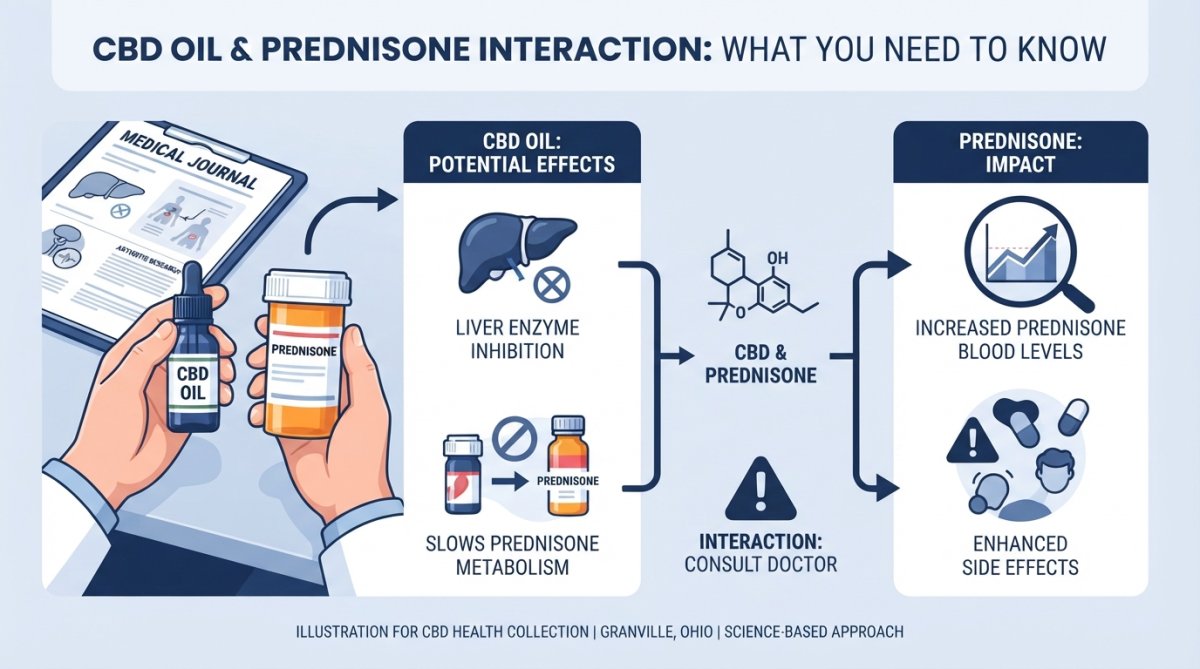
Both CBD and prednisone are metabolized by the cytochrome P450 enzyme system, particularly CYP3A4. CBD is a moderate inhibitor of CYP3A4, meaning it can slow the metabolism of other drugs processed by this enzyme. If CBD slows prednisone metabolism, prednisone levels in your blood could increase, potentially amplifying both therapeutic effects and side effects.
This is a real pharmacokinetic interaction that should be discussed with your prescribing physician before starting CBD. Adjustment decisions should be made by your medical team based on your specific situation, not guessed at independently.
Drug-Drug Interaction Matrix for CBD and Common PMR Medications
| Medication | Primary Use in PMR | Interaction Risk | Key Consideration |
|---|---|---|---|
| Prednisone | Anti-inflammatory | Moderate | CYP3A4 inhibition may increase prednisone levels |
| Methotrexate | Steroid-sparing agent | Low to Moderate | Both metabolized hepatically; monitor liver function |
| Azathioprine | Steroid-sparing agent | Low | Limited CYP3A4 interaction reported |
| Aspirin | Cardiovascular protection | Low | No significant CYP3A4 overlap |
| NSAIDs (ibuprofen, naproxen) | Pain management | Moderate | Both affect GI and renal function; combined use increases risk |
| Statins (atorvastatin, simvastatin) | Cholesterol management | Moderate to High | CYP3A4 inhibition may increase statin levels and myopathy risk |
| Bisphosphonates (alendronate) | Bone protection | Low | No significant interaction |
| ACE inhibitors (lisinopril) | Blood pressure control | Low | No significant CYP3A4 interaction |
CBD has the highest interaction potential with prednisone and statins due to CYP3A4 inhibition. NSAIDs combined with CBD may increase gastrointestinal and renal stress.
Never start CBD without informing your rheumatologist or prescribing physician. The interaction with prednisone is real, and dose adjustments may be necessary. Stopping prednisone abruptly or reducing it without medical guidance can trigger severe PMR flares.
CBD Oil Dosage for Inflammatory Conditions: Finding Your Starting Point
If your physician agrees that CBD is worth trying, dosing is highly individual. There is no established standard dose for PMR because clinical trials haven’t been conducted.
Dosage Titration and Bioavailability Considerations
CBD dosing in research studies ranges from 50 mg to 1,500 mg daily depending on the condition. For inflammatory conditions, doses between 300-600 mg daily have been used, but this is not evidence-based guidance specific to PMR.
Oral CBD has poor bioavailability (around 6-13%) due to first-pass hepatic metabolism. Water-soluble or emulsified CBD formulations improve bioavailability through enhanced absorption, a critical consideration when cost and efficacy matter.
A reasonable approach for someone new to CBD:
- Start with 10-20 mg daily
- Maintain this dose for 2 weeks while monitoring symptoms
- If well-tolerated with no obvious benefit, increase to 30-40 mg daily
- Continue gradual increases every 2 weeks until you observe benefit or reach 200-300 mg daily
- Beyond 300 mg daily, consult your healthcare provider
PMR-Specific Symptom Tracking for Optimal Results
Track these specific PMR symptoms daily:
- Morning stiffness duration
- Pain severity on a 0-10 scale (shoulders, hips, neck)
- Functional limitation (raising arms overhead, climbing stairs, getting out of bed)
- Sleep quality
- Prednisone dose
- Any CBD side effects
Keep this log for 4 weeks before starting CBD, then continue for 8-12 weeks after. This before-and-after comparison reveals whether CBD is making a measurable difference. Share this tracking data with your rheumatologist to guide dose adjustments or continuation decisions.
Best CBD Oil for Chronic Pain and Systemic Inflammation
If you decide to try CBD, product quality directly affects both safety and efficacy.
Quality Control and Third-Party Testing: What to Look For
The CBD market remains under-regulated. When evaluating a CBD product, look for:
-
Third-party lab testing by an independent laboratory (not the manufacturer’s lab), verifying CBD potency, absence of heavy metals, pesticides, microbial contaminants, and unacceptable THC levels.
-
Certificate of Analysis (COA), publicly available and recent (within the last year), specific to the exact product batch.
-
Full-spectrum vs. isolate, Full-spectrum contains other cannabinoids and plant compounds that may work synergistically. Isolate contains only CBD. For inflammatory conditions, full-spectrum may offer advantages.
-
Extraction method, CO2 extraction is considered cleanest; ethanol extraction is acceptable.
-
Source transparency, Hemp should be grown in the United States under regulated conditions.
CBD Health Collection meets all these criteria. Their products are derived from organically grown, USA-sourced hemp, extracted using clean CO2 processing, produced in a GMP- and FDA-registered facility, and independently third-party lab tested.
Full-Spectrum vs. Isolate: Which Works Better for PMR
Full-spectrum CBD contains the entire plant matrix, CBD plus other cannabinoids like CBG and CBN, plus terpenes and flavonoids. This combination may produce an "entourage effect" where components work synergistically to enhance anti-inflammatory and analgesic effects.
Isolate contains only CBD with all other plant compounds removed. For systemic inflammation like PMR, full-spectrum theoretically offers advantages, though this is not proven in human studies. A practical approach: start with full-spectrum if available and well-tested. If you experience side effects, switch to isolate.
Full-spectrum products vary more in composition because plant material varies. If you find a full-spectrum product that works, buying the same batch/lot ensures consistency.
Safety, Side Effects, and When CBD Oil May Not Be Right for You
CBD is generally well-tolerated, but it’s not risk-free and not appropriate for everyone.
Potential Adverse Effects and Patient-Reported Outcomes
Common side effects from CBD include dry mouth, drowsiness or fatigue, diarrhea or appetite changes, headache, and dizziness. These are typically mild and dose-dependent, often resolving with continued use or dose reduction. Serious adverse effects are rare but include hepatotoxicity at very high doses.
CBD may not be appropriate if you are pregnant or breastfeeding, have significant liver disease, are taking medications with narrow therapeutic windows, have a history of cannabis use disorder, or are allergic to hemp or cannabis. Discuss your specific situation with your physician before starting.
Can CBD Oil Replace Prednisone for Polymyalgia Rheumatica?
No. Prednisone works rapidly and reliably in PMR because it broadly suppresses inflammation. CBD’s mechanisms are less potent and more variable. No patient should attempt to replace prednisone with CBD alone without medical supervision, as doing so risks severe PMR flares and potentially serious complications.
The more realistic question is whether CBD might allow you to use a lower prednisone dose or taper more quickly. This is theoretically possible but unproven. Your goal should be the minimum effective prednisone dose that controls your symptoms. If CBD contributes to that goal, it’s worth considering as an addition to your prednisone-based regimen.
Moving Forward: A Practical Framework for Considering CBD
If you’re interested in exploring CBD for polymyalgia rheumatica:
-
Discuss with your rheumatologist first. Get their perspective on whether CBD is worth trying in your case.
-
Establish baseline symptoms. Track your symptoms for 2-4 weeks before starting CBD using the tracking framework above.
-
Choose a high-quality product. Look for third-party testing, a publicly available Certificate of Analysis, clean extraction methods, and USA-sourced hemp. CBD Health Collection’s products meet these standards and include a 30-day satisfaction guarantee.
-
Start low and go slow. Begin with 10-20 mg daily. Increase gradually every 2 weeks while monitoring your symptom log.
-
Track objectively. Continue your symptom log for 8-12 weeks. Look for measurable changes in morning stiffness duration, pain scores, and functional ability.
-
Communicate with your medical team. Share your tracking data with your rheumatologist. If CBD appears helpful, discuss whether prednisone dose adjustments are appropriate.
-
Reassess periodically. If you continue CBD, check in with your physician every 3-6 months.
Polymyalgia rheumatica is a serious condition requiring medical supervision. While research on CBD for PMR specifically is lacking, the mechanisms by which CBD affects inflammation and pain are scientifically plausible, and many patients with chronic inflammatory conditions report benefit. If you’re struggling with prednisone side effects or looking for complementary strategies to optimize your treatment, CBD is worth discussing with your rheumatologist. CBD Health Collection offers independently tested, organically sourced CBD products designed for optimal bioavailability and systemic inflammation support, backed by a 30-day guarantee so you can try it risk-free while working with your medical team to find your best treatment approach.
Frequently Asked Questions
What is polymyalgia rheumatica and how is it typically treated?
Polymyalgia rheumatica (PMR) is an autoimmune inflammatory condition characterized by muscle pain and stiffness, typically affecting the shoulders, hips, and neck. It's most common in adults over 50. Standard treatment involves corticosteroids like prednisone, which effectively reduce systemic inflammation and musculoskeletal pain. However, long-term corticosteroid use carries significant side effects, leading some patients to explore complementary options like CBD oil.
Can CBD oil be taken with prednisone for polymyalgia rheumatica?
CBD and prednisone may interact through liver metabolism (CYP3A4 pathway), potentially affecting corticosteroid levels. Before combining them, consult your rheumatologist or pharmacist. They can review your specific medications and monitor for interactions. Never stop or adjust prednisone without medical guidance. CBD oil may complement but should not replace prescribed treatment without professional oversight and approval.
Are there any clinical studies on CBD oil specifically for polymyalgia rheumatica?
Clinical evidence directly addressing CBD for PMR is limited. However, research on CBD's anti-inflammatory and analgesic properties, along with studies on CBD for autoimmune conditions and chronic pain, suggests therapeutic potential. Most evidence remains preclinical or involves animal models. Patient-reported outcomes and anecdotal reports indicate symptom relief, but evidence-based medicine standards require larger, controlled trials before definitive recommendations.
How do I know if a CBD oil product is high quality and safe for long-term use?
Look for third-party lab testing with a Certificate of Analysis (COA) verifying purity, potency, and absence of contaminants like heavy metals and pesticides. Choose full-spectrum or broad-spectrum products from organically grown, USA-sourced hemp extracted via clean CO2 methods. Verify the product is made in a GMP- and FDA-registered facility. Reputable brands offer transparent testing results and a satisfaction guarantee, allowing you to assess quality before committing to long-term use.
This article was written using GrandRanker