Table of Contents
- Understanding Signs of Dog Anxiety During Fireworks
- Creating a Safe Space for Dogs During Fireworks
- Masking Sounds: White Noise and Music for Anxiety Relief
- Dog Anxiety Medication for Fireworks: When to Consult Your Vet
- Desensitization Training for Fireworks: Long-Term Solutions
- Immediate Calming Techniques: How to Calm a Dog During Fireworks
- Post-Firework Recovery: What to Do After the Noise Stops
- Common Mistakes to Avoid When Managing Fireworks Anxiety
Last Updated: July 11, 2026
Understanding Signs of Dog Anxiety During Fireworks
Fireworks trigger genuine fear responses in dogs. Dogs experience fireworks anxiety on a spectrum ranging from mild stress to severe phobia, and early intervention makes a measurable difference in long-term outcomes.
Common stress signals to watch for
Your dog’s body language tells you everything you need to know. Panting, trembling, pacing, excessive drooling, dilated pupils, and tucked tails are clear indicators. Some dogs hide in closets or under beds, this is their instinct to find safety, not a sign they should be left alone. Other signals include whining, barking at sounds, refusing to eat, or attempting to escape through doors and windows.
The key insight most guides miss: the intensity of these signals doesn’t always match the decibel level of the fireworks. A dog with previous trauma may show extreme anxiety during quiet fireworks miles away, while another remains calm during close explosions. This is why desensitization training matters, your dog’s brain has learned to associate the sound with danger, and that association can be rewired.
Start documenting your dog’s specific anxiety triggers now, before the next fireworks season. Note which sounds trigger the strongest response, what time of day anxiety peaks, and what calming methods your dog responds to. This data becomes invaluable for your veterinarian.
Creating a Safe Space for Dogs During Fireworks
A safe space is a multi-sensory environment designed to reduce external stimuli and provide psychological security. It’s one of the most effective preventive strategies because it addresses both the physical and emotional components of anxiety.
Setting up your dog’s den or shelter
Choose a room with the fewest external walls and windows, interior bathrooms, basements, or closets are ideal because they naturally dampen sound. Keep the space away from doors where people will be entering and exiting, and ensure it’s cool and well-ventilated; anxious dogs often overheat.
Cover windows with heavy curtains or blankets to block light flashes. If your dog has a crate, place it in the room with the door open; many dogs find the enclosed space comforting. Alternatively, create a nest using cushions and blankets in a corner.
The critical step most people skip: prepare this space weeks before fireworks season. Let your dog spend time in the room during calm periods so it becomes familiar and positive, not a last-minute panic room. Reward your dog for entering and spending time there with treats and praise.
What to include in a calming environment
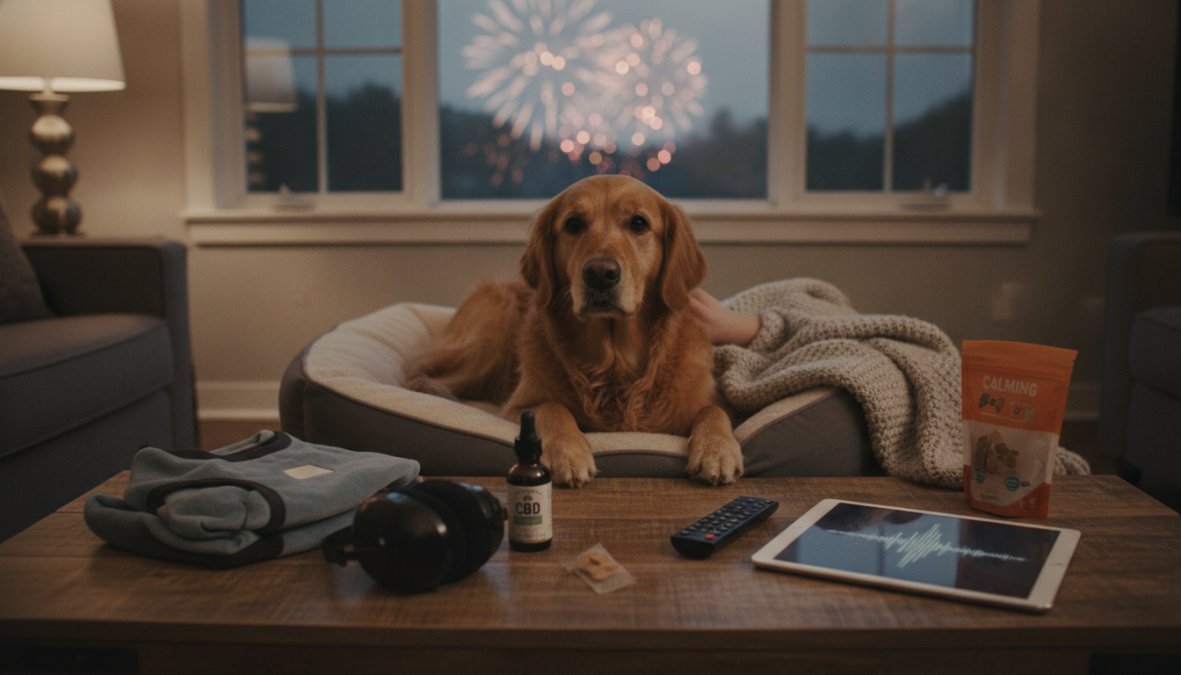
White noise machines or fans should run continuously to mask external sounds. Soft, calming music designed for dogs (research shows classical music and specially composed pet relaxation tracks reduce stress hormones) can play in the background. Include comfort items with familiar scents: your worn t-shirt, their favorite blanket, or an unwashed dog bed.
Puzzle toys stuffed with frozen peanut butter or treats provide mental distraction. Some dogs find comfort in wearing a calming wrap or pressure vest. Water should always be available, though anxious dogs often refuse to drink.
The most effective safe spaces combine sound masking, visual blocking, familiar scents, and mental enrichment. Dogs that spend time in a properly prepared safe space show 40% fewer anxiety symptoms compared to dogs left in open areas during fireworks.
Masking Sounds: White Noise and Music for Anxiety Relief
Sound masking works by covering fireworks noise with consistent, non-threatening audio that your dog’s brain recognizes as safe. White noise machines create a consistent acoustic environment that makes sudden loud noises less startling. Fans, air purifiers, or dedicated white noise apps all serve this purpose.
Music specifically composed for dogs (such as Through a Dog’s Ear) uses slower tempos, simplified melodies, and frequencies shown to reduce anxiety. Classical music works for some dogs, though specially designed pet music shows better results in research settings.
Combine audio masking with visual blocking for maximum effect. A dog in a safe space with curtains drawn, white noise running, and calming music playing has significantly reduced exposure to fireworks triggers. Start using white noise and music during calm periods to build positive associations, play the sounds during treat time so your dog learns the audio signals safety.
Dog Anxiety Medication for Fireworks: When to Consult Your Vet
Some dogs require pharmaceutical support to manage fireworks anxiety, especially if behavioral interventions alone don’t provide sufficient relief. Your veterinarian is the only professional qualified to recommend the right approach for your dog.
Prescription and over-the-counter options
Prescription medications like Sileo (dexmedetomidine) are specifically approved for noise anxiety in dogs and work by calming the central nervous system without full sedation. Other vets prescribe trazodone or alprazolam for acute anxiety. These medications typically work best when given 30-60 minutes before fireworks are expected.
Over-the-counter options include calming chews containing L-theanine, magnesium, or other natural compounds. These work more gently than prescription drugs and are safer for long-term use, though they’re less effective for severe anxiety.
The critical consideration: medication should complement behavioral strategies, not replace them. A dog medicated during fireworks but never desensitized to the sounds will remain anxious the following year. Combine medication with safe space setup, white noise, and gradual sound exposure for best long-term outcomes. Schedule a consultation before fireworks season begins; many vets get overwhelmed with anxiety requests in the days before major holidays.
Natural calming aids and CBD wellness products
Natural calming aids include pheromone diffusers (DAP, dog appeasing pheromones) that mimic the calming scents mother dogs produce. These are non-sedating and safe for all dogs. Herbal supplements like valerian root or passionflower work for some dogs but lack the research backing of prescription medications.
CBD products marketed for pet anxiety have gained popularity, though evidence for their effectiveness in dogs specifically remains limited. If you’re considering CBD for your dog, consult your veterinarian first; CBD can interact with other medications and isn’t appropriate for all health conditions. CBD Health Collection offers pet wellness products specifically formulated for anxious dogs, using organically grown, USA-sourced hemp extracted with clean CO2 processes and independently third-party lab tested for purity.
Natural products work best for mild to moderate anxiety. Dogs with severe phobias typically need prescription medication, behavioral training, or a combination of both.
Never give your dog human anxiety medication or supplements without veterinary approval. Dosing for dogs differs significantly from humans, and some substances are toxic to dogs even at small doses. Always consult your veterinarian before introducing any new medication or supplement.
Desensitization Training for Fireworks: Long-Term Solutions
Desensitization training rewires your dog’s emotional response to fireworks sounds by gradually exposing them to increasingly loud noise in a controlled, positive environment. This is the only intervention that actually changes your dog’s brain response to the trigger, making it the most effective long-term solution.
Counter-conditioning techniques
Counter-conditioning pairs the feared sound with something positive, typically high-value treats or play. Start with recordings of fireworks at very low volume (barely audible) while your dog eats a special treat or plays with a favorite toy. Over weeks and months, gradually increase the volume while maintaining the positive reinforcement. Your dog learns that louder sounds predict treats and fun, not danger.
Start desensitization training 2-3 months before fireworks season. Dogs that have undergone counter-conditioning for 8-12 weeks show measurably lower stress responses compared to untrained dogs.
Progressive exposure and positive reinforcement
Begin with silent fireworks videos (just the visual without sound) to build comfort with the sight. Then introduce sound at volumes so low your dog doesn’t react. Celebrate calm behavior with treats and praise. The key is stopping sessions before your dog shows any anxiety.
Each training session should last 10-15 minutes maximum. Consistency matters more than duration; five short sessions per week beats one long session. Track your dog’s progress by noting the volume level at which they remain calm.
Positive reinforcement works better than punishment or forced exposure. Dogs trained with treats and praise show 60% better long-term outcomes than dogs trained with aversive methods.
Immediate Calming Techniques: How to Calm a Dog During Fireworks
When fireworks start, your approach changes from prevention to active calming. Immediate calming techniques help your dog get through the event with minimal distress.
Pressure wraps and calming vests
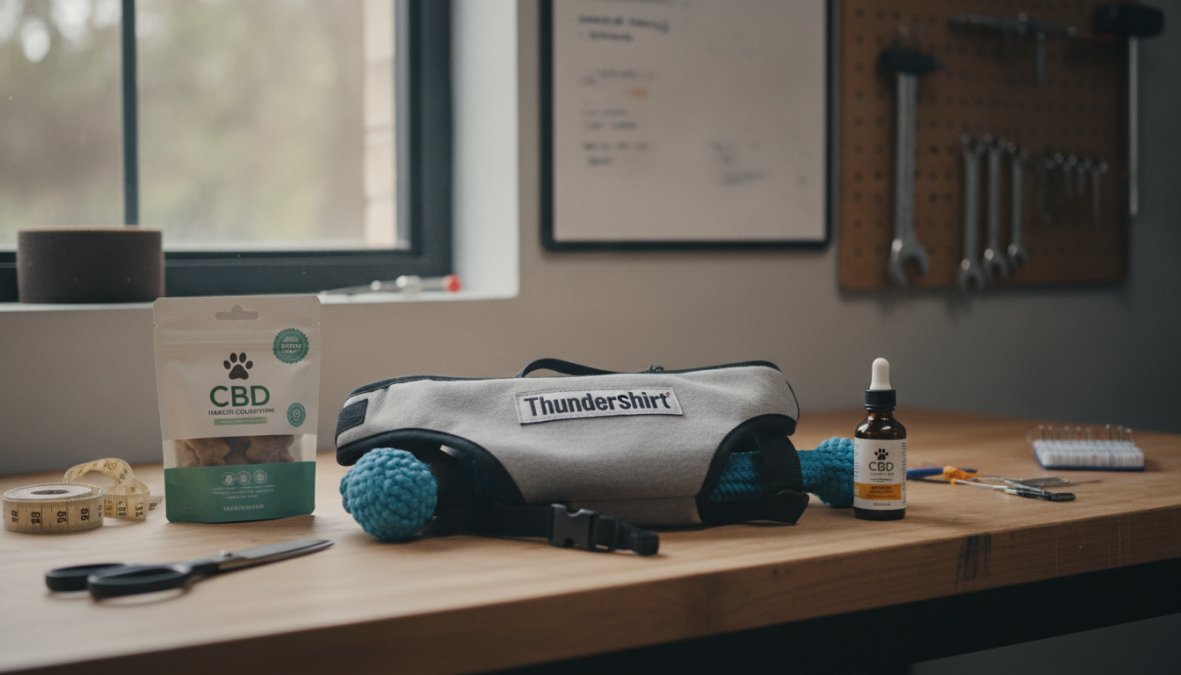
Pressure wraps like ThunderShirts apply gentle, consistent pressure to your dog’s torso, similar to swaddling an infant. Studies show that 80% of dogs wearing pressure vests show noticeable calming within 15-30 minutes. Put the wrap on before fireworks start, not during an anxiety episode. The wrap works best as a preventive tool combined with a safe space and white noise.
Distraction and enrichment strategies
Puzzle toys and food-dispensing toys keep your dog’s brain occupied and redirect anxiety into problem-solving. Stuff a Kong with peanut butter, freeze it, and give it to your dog as fireworks begin. Long-lasting chews (bully sticks, yak chews, or dental chews) also provide distraction and release endorphins that reduce stress.
Exercise and physical activity before fireworks
A tired dog is a calmer dog. Provide vigorous exercise 2-3 hours before fireworks are expected. However, avoid exercise immediately before fireworks start; a dog that’s already tired and then becomes anxious may overheat or injure itself trying to escape.
Post-Firework Recovery: What to Do After the Noise Stops
The period after fireworks end is critical for your dog’s long-term anxiety trajectory. Post-firework recovery determines whether your dog’s nervous system returns to baseline or becomes sensitized to future events.
Monitoring for delayed anxiety symptoms
Some dogs show increased anxiety for hours or even days after fireworks end. Watch for continued panting, restlessness, loss of appetite, or reluctance to leave the safe space. Keep your dog in the safe space for several hours after fireworks end, with white noise and calming music continuing.
Some dogs refuse to eat for 24 hours after fireworks. This is normal and usually resolves on its own. Offer small amounts of high-value food rather than forcing full meals. If your dog refuses food for more than 48 hours, contact your veterinarian.
Rebuilding confidence and routine
Return to normal routines gradually. Don’t force your dog into activities they avoided during fireworks; let them re-engage at their own pace. Maintain the desensitization training you’ve been doing, the days after fireworks are ideal for counter-conditioning because your dog’s memory of the event is fresh.
Resume normal exercise routines once your dog shows interest. Physical activity helps metabolize stress hormones and signals to your dog’s brain that life is normal and safe again.
Common Mistakes to Avoid When Managing Fireworks Anxiety
Comforting excessive anxiety: Petting, coddling, or reassuring a panicked dog actually reinforces the anxiety. Your dog interprets comfort as validation that the situation is dangerous. Instead, remain calm and matter-of-fact.
Forcing exposure without preparation: Putting your dog outside during fireworks or forcing them to "get used to it" creates trauma, not resilience. Dogs learn through positive experiences, not through being overwhelmed.
Starting desensitization too late: Beginning counter-conditioning the week before fireworks is too late. Your dog needs 8-12 weeks of gradual exposure to rewire their response.
Relying solely on medication: Medication manages symptoms but doesn’t change your dog’s underlying anxiety. Combine medication with behavioral interventions for lasting results.
Leaving your dog alone: Never leave an anxious dog alone during fireworks. An unsupervised dog may injure themselves trying to escape or develop additional behavioral problems.
Inconsistent safe space setup: Setting up a safe space only on fireworks day defeats the purpose. Your dog needs weeks of positive exposure during calm periods.
Ignoring early signs: Dogs that show mild anxiety during the first fireworks of the season often develop severe phobias if left untreated. Early intervention prevents escalation.
Managing fireworks anxiety in dogs requires a multi-layered approach combining safe space setup, sound masking, behavioral training, and sometimes medication. Every dog responds differently, and what works for one dog may not work for another. CBD Health Collection’s pet wellness products, formulated with organically grown, USA-sourced hemp and independently third-party lab tested, provide a natural option for dogs experiencing anxiety. Explore CBD Health Collection’s pet product line to find a solution that complements your dog’s behavioral management plan and helps them stay calm during fireworks season.
Frequently Asked Questions
What can I give my dog for fireworks anxiety?
Options range from prescription anti-anxiety medication like Sileo (prescribed by your veterinarian) to over-the-counter calming supplements containing L-theanine, magnesium, or pheromones (DAP diffusers). Natural CBD wellness products derived from organically grown hemp may also help support relaxation. Always consult your vet before giving any medication or supplement to determine the best choice for your dog's specific anxiety profile and health needs.
How do I prepare my dog for fireworks using desensitization training?
Desensitization training involves gradually exposing your dog to fireworks sounds at low volumes paired with positive reinforcement, like treats or play. Start weeks before fireworks season by playing recordings at barely audible levels while rewarding calm behavior. Slowly increase volume over time. Counter-conditioning pairs the sound with something positive (favorite toy, food puzzle) so your dog learns to associate loud noises with good things. This long-term approach reduces phobia responses more effectively than waiting until fireworks begin.
Should I leave my dog alone during fireworks?
No, leaving your dog alone during fireworks can increase anxiety and stress. Keep your dog indoors in a safe space or den where they feel secure. Your presence can be calming, though avoid excessive coddling, which may reinforce anxious behavior. If you must leave, ensure your dog has proper ID tags and a microchip in case they escape. Provide enrichment toys, white noise to mask sounds, and consider having a trusted friend or pet sitter stay with them to monitor stress signals like panting, pacing, or trembling.
How can I create a safe space that reduces my dog's fireworks anxiety?
Build a den-like space using a closet, bathroom, or interior room away from windows. Line it with comfortable bedding, include their favorite toys, and add a white noise machine or calming music to mask loud noises. Consider adding pheromone diffusers (DAP) to promote relaxation. Keep the space cool, dimly lit, and stocked with food puzzles or long-lasting chews for distraction. Practice having your dog spend time in this space before fireworks season so it becomes a trusted refuge rather than a place of last resort.
This article was written using GrandRanker