Table of Contents
- What Is CBD Oil for Dog Anxiety Relief?
- How CBD Oil Works for Canine Anxiety and Stress Response
- CBD Dosage for Dogs by Weight: Finding the Right Amount
- Side Effects of CBD for Dogs: Safety and What to Watch For
- Choosing the Right CBD Oil: Extraction Methods and Spectrum Types
- How to Calm an Anxious Dog Naturally: Integrating CBD With Behavioral Training
- CBD Oil for Dog Anxiety Relief: Key Takeaways and Next Steps
Last Updated: July 9, 2026
What Is CBD Oil for Dog Anxiety Relief?
CBD oil for dog anxiety relief has become increasingly popular among pet owners seeking natural alternatives to traditional anxiety medications. Cannabidiol, commonly known as CBD, is a non-psychoactive compound extracted from hemp plants that interacts with your dog’s endocannabinoid system to promote relaxation and reduce stress responses. Unlike THC, the psychoactive component in cannabis, CBD doesn’t produce a "high" in dogs or humans. Instead, it binds to cannabinoid receptors throughout the nervous system, helping regulate mood, stress response, and emotional processing.
Research from the American Kennel Club on canine anxiety indicates that separation anxiety, noise phobia, and generalized anxiety are among the most common behavioral issues veterinarians encounter. CBD oil offers a natural remedy that complements behavioral training and other wellness approaches.
How CBD Interacts With Your Dog’s Endocannabinoid System
Your dog’s body contains an endocannabinoid system (ECS), a network of receptors and neurotransmitters responsible for maintaining internal balance and regulating stress responses. When CBD enters your dog’s system, it modulates how the body uses its own naturally occurring endocannabinoids, amplifying natural calming mechanisms. The endocannabinoid system contains two primary receptor types: CB1 receptors in the brain and nervous system, and CB2 receptors throughout the immune system and peripheral tissues.
When your dog experiences anxiety, the amygdala becomes overactive. CBD helps calm this response by increasing serotonin signaling and reducing stress hormones like cortisol, creating a more balanced emotional state where your dog responds to triggers with less reactivity.
Why Dogs Experience Anxiety and Stress
Dogs experience anxiety for various reasons, ranging from genetics and early socialization to environmental triggers and medical conditions. Common anxiety triggers include thunderstorms, fireworks, separation from owners, unfamiliar people or animals, and routine changes. Certain breeds like German Shepherds, Labrador Retrievers, and toy breeds tend to show higher anxiety levels.
Chronic anxiety impacts physical health through muscle tension, digestive issues, and weakened immune function. CBD’s anti-inflammatory properties support overall wellness beyond anxiety relief, promoting better sleep and faster recovery from stress-induced symptoms.
How CBD Oil Works for Canine Anxiety and Stress Response
CBD reduces anxiety through multiple mechanisms that work together to create a calming effect. The compound increases serotonin availability in the brain, the same neurotransmitter targeted by prescription anxiety medications. Unlike pharmaceuticals with narrow mechanisms of action, CBD works through multiple pathways simultaneously, making it effective for different anxiety types without the same risk of dependency or tolerance buildup.
Within 30 minutes to 2 hours of consumption, depending on metabolism and food intake, you’ll typically notice behavioral changes. Your dog may become noticeably calmer, more willing to engage in normal activities, and less reactive to previously triggering stimuli. Regular CBD use helps reset your dog’s nervous system, making them less prone to anxiety episodes over time.
Breed-Specific Anxiety Triggers and CBD Effectiveness
Different dog breeds experience anxiety in distinct ways. Small breeds like Chihuahuas and Toy Poodles tend toward noise sensitivity and separation anxiety, and CBD works particularly well because it directly addresses hypervigilance and fear response. Larger breeds like German Shepherds and Golden Retrievers often experience anxiety related to social situations or environmental changes, benefiting from CBD’s ability to promote confidence and reduce hyperarousal.
Working breeds and sporting dogs sometimes develop anxiety from insufficient mental or physical stimulation. For these dogs, CBD works best as part of a comprehensive approach including increased exercise, enrichment activities, and behavioral training.
CBD Dosage for Dogs by Weight: Finding the Right Amount
Determining the right CBD dosage requires careful consideration of your dog’s weight, anxiety severity, and product concentration. Most veterinarians and CBD manufacturers recommend starting with 0.25 mg of CBD per pound of body weight, then adjusting based on response over 2-4 weeks. For a 50-pound dog, this starting dose would be approximately 12.5 mg of CBD daily. A 100-pound dog would begin with 25 mg daily.
CBD products come in various concentrations measured in milligrams per milliliter (mg/mL) for oils and tinctures. A 500 mg bottle of CBD oil in a 30 mL container contains approximately 16.7 mg per mL, while a 1000 mg bottle contains about 33 mg per mL. Understanding these ratios helps you accurately measure your dog’s dose.
Dosage Titration and Monitoring Your Dog’s Response
Dosage titration, gradually increasing the amount of CBD your dog receives, is the most effective way to find their optimal dose. Begin with your calculated starting dose and maintain it for 7-10 days while observing behavior. Look for signs of improvement: reduced barking, calmer demeanor during triggers, better sleep, and increased engagement in normal activities.
After the initial observation period, increase the dose by 25% and monitor for another 7-10 days. Continue this gradual increase until you notice significant anxiety relief or reach the upper recommended range of 1-2 mg per pound of body weight. Many dogs show optimal results at doses between 0.5-1 mg per pound.
Keep a detailed log of your dog’s behavior and anxiety episodes. Document specific incidents before and after CBD administration to identify patterns and determine whether dosage adjustments are helping.
The best time to give CBD to your dog is 30-60 minutes before anticipated anxiety triggers. If your dog experiences separation anxiety, administer CBD before you leave. For noise phobia, give it before storms or fireworks. This proactive approach maximizes CBD’s preventive benefits.
Side Effects of CBD for Dogs: Safety and What to Watch For
CBD is generally well-tolerated in dogs, with side effects being rare and mild compared to pharmaceutical anxiety medications. The most commonly reported side effect is drowsiness, particularly when dogs first start CBD or when doses are increased. This typically diminishes after a few days as your dog’s body adjusts.
Other potential side effects include dry mouth, decreased appetite, and mild digestive changes. These effects occur in only a small percentage of dogs and usually resolve within days. More rarely, some dogs experience slight changes in liver enzyme levels, which is why baseline bloodwork before starting CBD and follow-up testing after 4-6 weeks is recommended, particularly for older dogs or those on other medications.
CBD doesn’t cause addiction or physical dependence in dogs. Unlike benzodiazepines and other prescription anxiety medications, stopping CBD doesn’t result in withdrawal symptoms or rebound anxiety.
When to Consult Your Veterinarian
Before starting your dog on CBD, consult with your veterinarian to rule out underlying medical conditions that might be causing or contributing to anxiety. Thyroid disorders, pain conditions, neurological issues, and other health problems can manifest as anxiety-like symptoms.
Veterinary consultation becomes especially important if your dog is currently taking other medications. CBD can interact with certain pharmaceuticals, particularly those metabolized by the liver’s cytochrome P450 enzyme system. Your veterinarian can review your dog’s current medication list and advise whether CBD is appropriate.
If your dog experiences any unusual symptoms after starting CBD, persistent vomiting, severe lethargy, loss of appetite lasting more than a day, or concerning behavioral changes, contact your veterinarian immediately.
Never stop prescription anxiety medications abruptly to switch to CBD. Work with your veterinarian to develop a transition plan that may involve gradually reducing pharmaceutical doses while introducing CBD. Abruptly discontinuing medications like benzodiazepines can cause dangerous rebound anxiety.
Choosing the Right CBD Oil: Extraction Methods and Spectrum Types
The quality of your dog’s CBD oil depends heavily on extraction method and product type. The most common extraction methods include CO2 extraction, ethanol extraction, and oil infusion, each producing different results in terms of purity and potency.
CO2 extraction is widely considered the gold standard for CBD production. This method uses pressurized carbon dioxide to separate cannabinoids and beneficial compounds from hemp plant material, producing a pure, potent extract free from solvent residues. Ethanol extraction produces high-quality CBD but may leave trace solvent amounts if not properly purged. Oil infusion, while simplest, produces lower-concentration products because CBD is merely dissolved in carrier oil rather than extracted at a molecular level.
Full-Spectrum vs. Broad-Spectrum vs. Isolate: What’s the Difference?
CBD products come in three main spectrum types, each offering different benefits for your anxious dog.
Full-spectrum CBD contains all naturally occurring compounds found in hemp, including CBD, other cannabinoids (like CBN and CBG), terpenes, flavonoids, and trace amounts of THC (less than 0.3% in legal products). These compounds work together synergistically in what researchers call the "entourage effect," where combined action produces stronger effects than CBD alone. For many dogs, full-spectrum products deliver more noticeable anxiety relief.
Broad-spectrum CBD contains most beneficial compounds found in hemp but has THC removed through additional processing. This option appeals to pet owners concerned about any THC exposure. Broad-spectrum products still offer entourage effects through remaining cannabinoids and terpenes, making them more effective than isolate for most anxious dogs.
CBD isolate is pure cannabidiol with all other hemp compounds removed. Isolate products contain only CBD, making them most predictable in dosing. However, isolate lacks entourage effect benefits, meaning you may need higher doses to achieve the same anxiety relief as full-spectrum or broad-spectrum products.
| Product Type | Cannabinoid Diversity | Entourage Effect | THC Content | Best For |
|---|---|---|---|---|
| Full-Spectrum | All hemp compounds | Strong | <0.3% | Maximum anxiety relief, most dogs |
| Broad-Spectrum | Most compounds | Moderate | 0% | Entourage benefits without THC concerns |
| Isolate | CBD only | None | 0% | Simple dosing, sensitive dogs |
CO2 Extraction, Third-Party Lab Testing, and Certificate of Analysis
Beyond extraction method and spectrum type, the most critical quality indicator is third-party lab testing. Reputable CBD manufacturers send products to independent laboratories for testing, verifying CBD concentration, checking for contaminants, and confirming THC levels are within legal limits. This testing produces a Certificate of Analysis (COA), a detailed report showing exactly what’s in the product.
When evaluating CBD oil for your dog, always request the product’s COA. This document should clearly show CBD concentration, other cannabinoid levels, terpene profiles, absence of heavy metals and pesticides, and THC levels confirming legal compliance.
A product’s price and marketing claims mean nothing without third-party lab verification. Always choose CBD oils with publicly available Certificates of Analysis from reputable independent laboratories. This single factor more than any other determines whether you’re getting a quality product that will actually help your anxious dog.
How to Calm an Anxious Dog Naturally: Integrating CBD With Behavioral Training
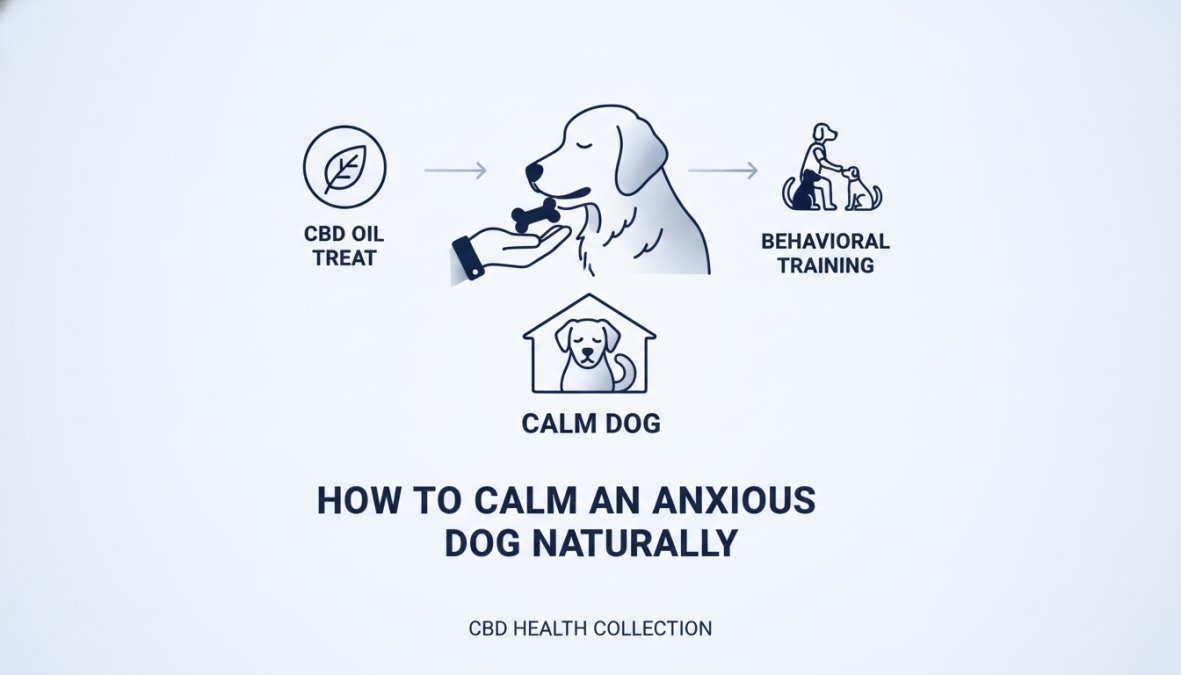
CBD works most effectively when combined with behavioral modification techniques that address the root causes of your dog’s anxiety. While CBD reduces the emotional intensity of anxiety responses, behavioral training teaches your dog new ways to respond to triggers. Together, these approaches create lasting changes in how your dog experiences and manages stress.
Start by identifying your dog’s specific anxiety triggers and situations where anxiety manifests most severely. Understanding the trigger pattern allows you to design targeted behavioral interventions. CBD can then support your dog’s ability to learn and practice new behaviors. The combination is particularly powerful because CBD reduces the emotional "noise" that prevents learning, allowing your dog to concentrate on learning new responses to previously anxiety-inducing situations.
Combining CBD Oil With Positive Reinforcement Techniques
Positive reinforcement training, where desired behaviors are rewarded with treats, praise, or play, works synergistically with CBD to create lasting behavioral change. When your dog is calm enough to engage with training (thanks to CBD), positive reinforcement teaches them that previously scary situations are actually safe and rewarding.
For separation anxiety, start with short departures while your dog is under the influence of CBD. Leave for just 2-3 minutes, then return and reward your dog’s calm behavior. Gradually extend these departures over weeks, always returning before your dog shows distress. For noise phobia, create a safe space where your dog can retreat during storms or fireworks. Before the stressful event, give your dog CBD and lead them to this safe space with high-value treats and toys. Reward your dog for remaining calm and relaxed.
For general anxiety and hypervigilance, teach your dog a "settle" command where they lie down on a mat and remain calm while you move around the house or receive visitors. Practice this command during calm times, rewarding your dog for settling and remaining relaxed. When your dog takes CBD before these practice sessions, they find it easier to achieve and maintain the calm state that the command represents.
Never force an anxious dog to confront their triggers during training. Allow your dog to retreat to safe spaces when needed. The goal is gradual, voluntary exposure combined with positive associations, not forcing your dog to “face their fears.” This gentle approach, supported by CBD, creates lasting confidence rather than temporary suppression of anxiety symptoms.
The timeline for seeing results from combined CBD and behavioral training typically spans 4-8 weeks. You may notice immediate anxiety reduction from CBD, but lasting behavioral change requires consistent training and practice. Patience and consistency are essential.
CBD Oil for Dog Anxiety Relief: Key Takeaways and Next Steps
CBD oil represents a safe, natural, and effective option for managing canine anxiety when selected carefully and used strategically. The compound works through your dog’s natural endocannabinoid system to reduce stress responses, promote relaxation, and support overall emotional wellbeing. Combined with behavioral training and veterinary guidance, CBD can help your anxious dog achieve lasting improvements in confidence and quality of life.
Key points to remember:
- Start with a conservative dose based on your dog’s weight (0.25 mg per pound) and gradually increase based on response
- Choose CO2-extracted products with third-party lab testing and accessible Certificates of Analysis
- Select full-spectrum or broad-spectrum products for maximum effectiveness through entourage effects
- Combine CBD with positive reinforcement training and behavioral modification for lasting results
- Consult your veterinarian before starting CBD, especially if your dog takes other medications
- Monitor your dog’s response carefully, keeping detailed logs of behavior changes and anxiety episodes
- Understand that results take time, expect 4-8 weeks for noticeable behavioral improvement
The journey toward helping your anxious dog involves patience, consistency, and a commitment to addressing both the physical and behavioral aspects of anxiety. CBD provides the biological support your dog needs to engage with training and develop new, healthier responses to anxiety triggers. When combined with proper behavioral techniques and veterinary oversight, CBD can transform your dog’s emotional experience and strengthen your bond.
CBD Health Collection offers premium, USA-sourced CBD products specifically formulated for pet wellness, including targeted solutions for dogs experiencing anxiety and stress. All CBD Health Collection pet products are extracted using clean CO2 methods, produced in GMP- and FDA-registered facilities, and independently third-party lab tested for purity and potency. With a 30-day satisfaction guarantee and free shipping nationwide, CBD Health Collection makes it easy to find the right CBD solution for your anxious dog’s unique needs. Visit cbdhealthcollection.com to explore pet-specific formulations and access detailed product information to support your dog’s anxiety relief journey.
Frequently Asked Questions
Is CBD oil safe for dogs with anxiety?
Yes, CBD oil is generally safe for dogs when sourced from reputable suppliers using clean CO2 extraction and third-party lab testing. Look for products with a certificate of analysis (COA) confirming THC-free, non-psychoactive formulations. Always consult your veterinarian before introducing CBD, especially if your dog takes other medications, as CBD may interact with certain drugs metabolized by the liver.
How long does it take for CBD oil to work on dog anxiety?
Most dogs show noticeable calming effects within 30 minutes to 2 hours of CBD administration, though individual response times vary. Consistent daily use over 2-4 weeks often yields the most significant improvements in anxiety-related behaviors. Bioavailability, how well your dog's body absorbs the CBD, depends on the product formulation and your dog's metabolism, so patience and monitoring are key.
What is the recommended dosage of CBD oil for dog anxiety by weight?
A common starting point is 0.25 mg per pound of body weight daily, divided into two doses. Small dogs (under 25 lbs) typically begin with 2-5 mg total; medium dogs (25-50 lbs) with 5-15 mg; large dogs (50+ lbs) with 15-25 mg. Dosage titration, gradually increasing the amount, helps you find the optimal dose. Always follow product-specific guidelines and adjust based on your dog's response with veterinary guidance.
How do I choose the best CBD oil for my dog's anxiety?
Prioritize products derived from organically grown, USA-sourced hemp extracted using clean CO2 methods. Verify third-party lab testing and request a certificate of analysis confirming purity and potency. Choose broad-spectrum or full-spectrum formulations for the entourage effect, unless your dog has THC sensitivity. Check for omega fatty acids and other beneficial compounds. Avoid products with artificial additives, and confirm the company offers a satisfaction guarantee and transparent dosing information.
Can CBD oil help with separation anxiety and noise phobia in dogs?
Yes, CBD oil may help manage both separation anxiety and noise phobia by promoting relaxation and reducing stress response. Many pet owners report success using CBD before triggering events, such as thunderstorms or when leaving home, combined with behavioral training. The cannabinoid receptors in your dog's brain help regulate anxiety-related behaviors, though results vary by individual dog. Consistent use alongside positive reinforcement training yields better outcomes than CBD alone.
This article was written using GrandRanker