

Table of Contents
- Does CBD Help With Joint Swelling? What the Research Shows
- CBD vs. Traditional Anti-Inflammatory Medications
- Topical CBD for Joint Pain Relief and Swelling
- CBD Dosage for Joint Pain: Finding Your Optimal Amount
- Types of CBD: Full-Spectrum, Isolate, and Broad-Spectrum
- Choosing High-Quality CBD Products for Joint Health
- Safety, Side Effects, and Drug Interactions
- What the Clinical Evidence Actually Says
Last Updated: June 20, 2026
Does CBD help with joint swelling? It’s one of the most common questions we receive at CBD Health Collection. Cannabidiol (CBD) interacts with the body’s endocannabinoid system in ways that may reduce inflammatory signaling, and preclinical research has shown genuine promise for joint-related conditions. Below, we’ll walk you through how CBD works on inflammation, what the clinical evidence supports, how to apply it effectively, and what separates a quality product from one that isn’t.
Does CBD Help With Joint Swelling? What the Research Shows
CBD is a non-psychoactive cannabinoid derived from hemp that interacts with cannabinoid receptors throughout the body to modulate inflammation and pain signals. The endocannabinoid system plays a direct role in regulating immune responses, including the inflammatory cascades responsible for joint swelling in conditions like rheumatoid arthritis and osteoarthritis.
Joint inflammation occurs when the immune system triggers the release of cytokines, signaling proteins that drive swelling, heat, and pain in synovial tissue. In arthritis, this process becomes chronic, degrading cartilage health over time.
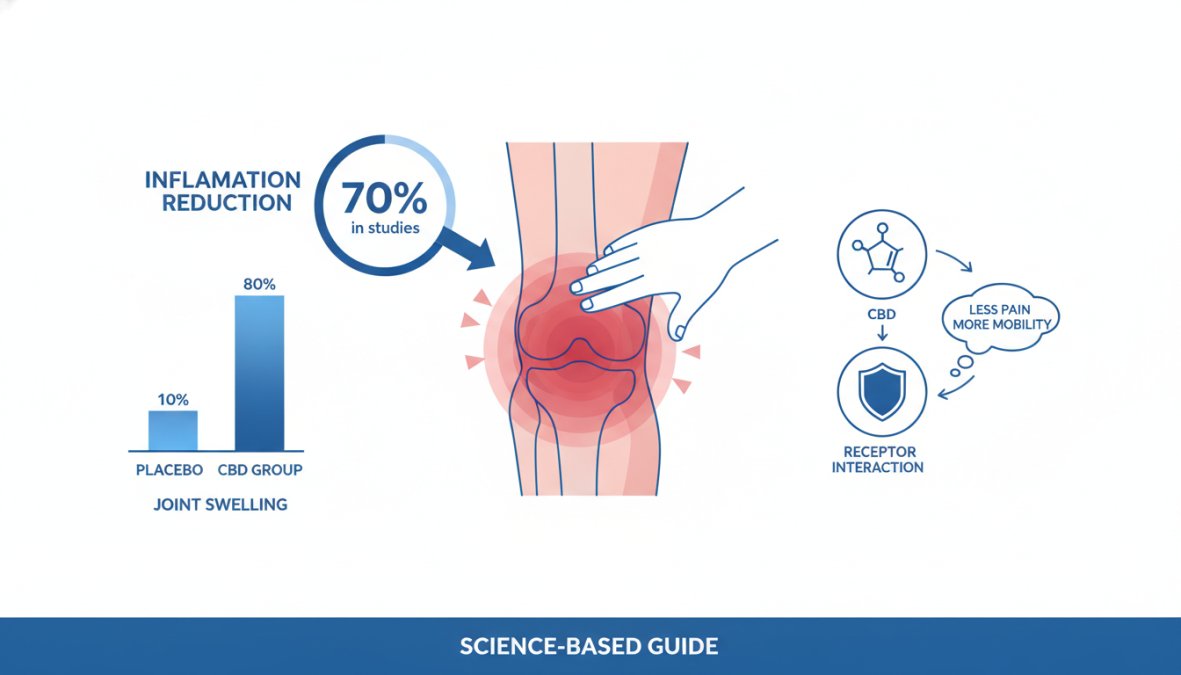
Understanding the inflammation response in joints
In osteoarthritis, inflammation is driven largely by mechanical wear. In rheumatoid arthritis, it’s an autoimmune process where the body attacks its own synovial membrane. CBD interacts with CB2 cannabinoid receptors concentrated in immune tissue, directly regulating cytokine production. Preclinical studies have consistently shown that cannabidiol can suppress pro-inflammatory cytokine activity, the same mechanism targeted by many pharmaceutical anti-inflammatories. Unlike opioids, CBD does not simply mask pain, it acts upstream on the signaling pathways that trigger swelling.
How CBD interacts with the endocannabinoid system
The endocannabinoid system is a network of receptors, enzymes, and endogenous ligands that regulates homeostasis across immune, nervous, and musculoskeletal systems. CBD does not bind directly to CB1 or CB2 receptors the way THC does. Instead, it modulates receptor activity and inhibits the enzyme FAAH, which breaks down anandamide, the body’s naturally occurring anti-inflammatory and analgesic compound.
This indirect mechanism means CBD’s effects tend to be gradual and systemic. Consistent daily use outperforms occasional dosing for joint inflammation. According to research reviewed by the National Institutes of Health on cannabinoid pharmacology, CBD’s multi-target activity makes it a candidate for conditions involving both pain and immune dysregulation.
CBD vs. Traditional Anti-Inflammatory Medications
Comparing CBD to COX-2 inhibitors and NSAIDs
NSAIDs like ibuprofen and naproxen work by inhibiting COX-2 enzymes, which produce prostaglandins that drive inflammation. These drugs are effective, but long-term use carries documented risks: gastrointestinal damage, cardiovascular strain, and kidney stress are well-established concerns with chronic NSAID use.
CBD operates differently. Rather than blocking COX-2 directly, it modulates upstream signaling through the endocannabinoid system and reduces cytokine activity through CB2 receptor pathways. Some preclinical data also suggests CBD has COX-2 inhibiting properties of its own, though at lower potency than pharmaceutical NSAIDs.
| Feature | NSAIDs | COX-2 Inhibitors | CBD |
|---|---|---|---|
| Mechanism | COX-1/COX-2 inhibition | COX-2 inhibition | ECS modulation, cytokine suppression |
| GI Risk | High with long-term use | Moderate | Low |
| Cardiovascular Risk | Moderate to high | Moderate | Minimal in current evidence |
| Psychoactive | No | No | No |
| Prescription Required | OTC available | Often prescription | No |
| Drug Interactions | Multiple | Multiple | Possible (CYP450) |
CBD is not a replacement for NSAIDs in acute, severe inflammation. It shows the most promise as a long-term, lower-risk complement or alternative for people who cannot tolerate chronic NSAID use.
Safety profile and side effects comparison
CBD’s adverse effects profile is notably mild compared to pharmaceutical anti-inflammatories. The most commonly reported issues are dry mouth, mild fatigue, and loose stools at high doses. These are dose-dependent and typically resolve with adjustment.
The more serious concern is drug interactions. CBD is metabolized by the CYP450 enzyme system in the liver, the same pathway used by many medications including warfarin, some statins, and certain arthritis drugs. This creates the potential for elevated drug plasma levels.
CBD can inhibit CYP450 enzymes, which process many common medications. If you take blood thinners, DMARDs, or other prescription drugs [for arthritis](/cbd-topical-cream-for-arthritis/), talk to your doctor before starting CBD.
Topical CBD for Joint Pain Relief and Swelling
Topical CBD for joint pain relief is one of the most targeted and practical applications of cannabidiol for swelling. Unlike oral CBD, topicals act locally without entering systemic circulation, which means fewer drug interactions and faster localized effects.
Application techniques for targeted swelling reduction
For swollen joints, a deliberate application technique improves outcomes:
- Clean the area first to remove any other topical products that could interfere with absorption.
- Apply generously to the joint and surrounding tissue, not just the point of pain.
- Use circular massage motions for two to three minutes to increase local circulation and drive the CBD deeper into tissue.
- Apply heat after (a warm towel, not direct heat) to open pores and improve penetration. Avoid this step if the joint is acutely inflamed and hot to the touch.
- Repeat consistently two to three times daily.
Bioavailability and absorption through skin
Bioavailability is the core challenge of topical CBD. Skin is an effective barrier, and standard oil-based CBD formulations have limited penetration depth. Water-based CBD formulations address this directly. CBD Health Collection uses a water-based delivery system specifically engineered for improved absorption, meaning more active cannabidiol reaches target tissue.
For deeper joints like hips or knees, pair your topical CBD with a [CBD oil](/cbd-oil-vs-pain-medication/) taken orally. The topical addresses local inflammation while oral CBD works systemically. The combination approach is more effective than either method alone for chronic joint swelling.
CBD Dosage for Joint Pain: Finding Your Optimal Amount
CBD dosage for joint pain is not one-size-fits-all. Body weight, metabolism, the severity of inflammation, and the delivery method all influence how much CBD you need and how often.
Dosage titration strategies for inflammation
Dosage titration is the process of starting low and adjusting incrementally until you find the minimum effective dose. A practical titration protocol for joint inflammation:
- Week 1-2: Start at 10-15mg CBD daily (oral). Assess baseline symptom response.
- Week 3-4: If insufficient effect, increase to 20-25mg daily.
- Week 5-6: Increase to 30-40mg if needed. Most people managing chronic joint pain find their range between 25-50mg daily.
- Beyond 50mg: Higher doses are used clinically for more severe conditions. At this level, physician guidance is strongly recommended.
According to guidance from Project CBD’s clinical guidance on cannabinoid dosing, starting low and titrating slowly reduces the risk of adverse effects and helps identify the minimum effective dose for each individual.
Tracking symptoms and adjusting your protocol
Keep a simple log: date, dose, delivery method, swelling level (1-10), pain level (1-10), and mobility notes. Do this for 30 days before drawing conclusions. What you’re looking for: a consistent downward trend in swelling and pain scores, improved morning joint mobility, and reduced need for rescue NSAIDs. If you see no change after six weeks at a consistent dose, either the dose needs adjustment or the product quality is the issue.
Types of CBD: Full-Spectrum, Isolate, and Broad-Spectrum
Cannabidiol (CBD) products come in three distinct formulations:
- Full-spectrum CBD contains all cannabinoids, terpenes, and flavonoids naturally present in hemp, including trace amounts of THC (under 0.3% legally). The combination produces the "entourage effect," where multiple cannabinoids work synergistically to enhance anti-inflammatory activity.
- Broad-spectrum CBD retains the full range of cannabinoids and terpenes except THC, which is removed entirely. This offers the entourage effect without any THC exposure.
- CBD isolate is pure cannabidiol with all other compounds removed. It’s the most predictable in dosing but lacks the synergistic benefits of full-spectrum or broad-spectrum formulations.
Which CBD type works best for joint swelling
For joint swelling and inflammation, broad-spectrum CBD is the strongest recommendation for most users. It delivers the entourage effect, which amplifies anti-inflammatory activity compared to isolate, without the THC that concerns some users or creates issues with drug testing. Full-spectrum is a close second and may be marginally more effective for severe inflammation, but the trace THC content is a practical concern for some.
Choosing High-Quality CBD Products for Joint Health
Not all CBD products deliver what they claim. The market has a significant quality problem, and the consequences for joint health are real: a low-quality product won’t help, and a contaminated one can cause harm.
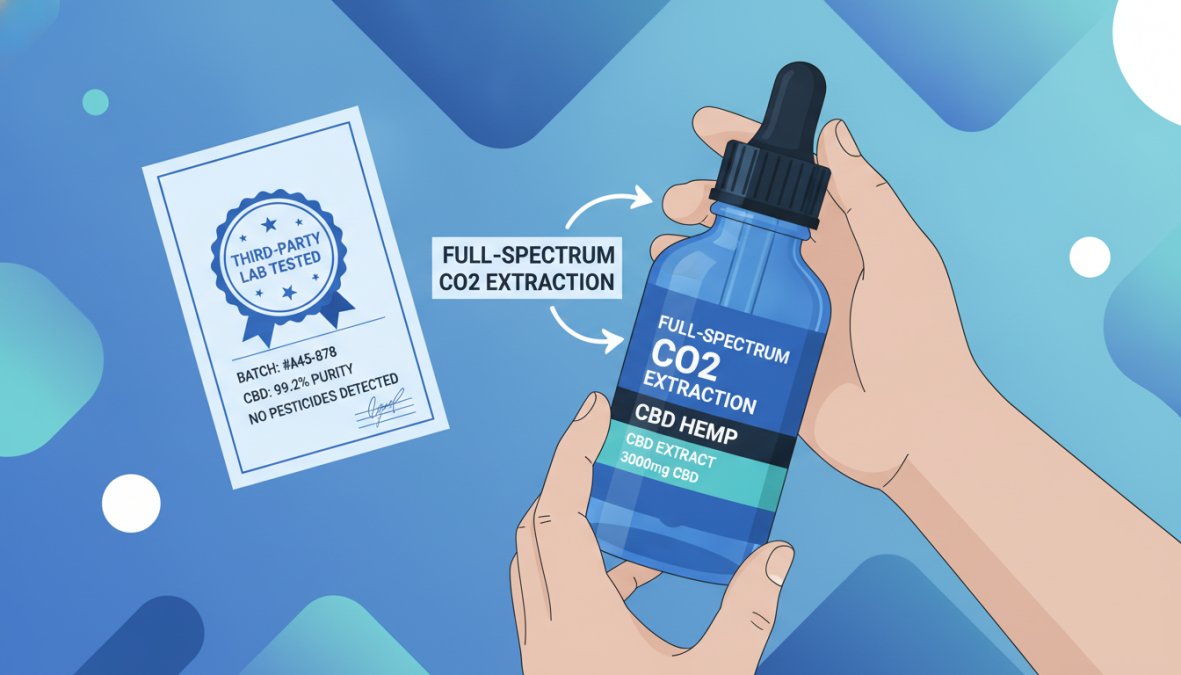
Third-party testing, certificates of analysis, and transparency
A certificate of analysis (COA) is a third-party laboratory report that verifies the cannabinoid content, confirms the absence of pesticides, heavy metals, and residual solvents, and validates that THC levels are within legal limits. Any CBD product sold without a current, accessible COA should be disqualified immediately.
What to check in a COA:
- Cannabinoid potency matches the label claim within 10%
- THC content is below 0.3% (or 0% for broad-spectrum)
- Heavy metals tested and within safe limits
- Pesticide screen completed with no detections
- Residual solvents tested (critical for CO2 extraction verification)
- Testing performed by an ISO-accredited laboratory
- COA date is within the last 12 months
CBD Health Collection publishes independently verified COAs for every product, produced in a GMP- and FDA-registered facility. That combination of manufacturing standards and third-party verification is the baseline for any product you should trust for a health application.
What to look for in sourcing and extraction methods
CO2 extraction is the gold standard. It produces a clean, full-spectrum or broad-spectrum extract without residual solvents and preserves the full cannabinoid and terpene profile. Ethanol extraction is acceptable but requires careful post-processing. Hydrocarbon extraction (butane, propane) is a red flag in a wellness product.
Hemp sourcing matters equally. Organically grown, USA-sourced hemp is subject to USDA oversight and is less likely to carry pesticide residues or heavy metal contamination. Hemp is a bioaccumulator, meaning it absorbs whatever is in the soil it grows in.
Safety, Side Effects, and Drug Interactions
The safety profile of CBD is generally favorable, but "generally favorable" is not the same as "universally safe." Context matters significantly.
CBD interactions with arthritis medications and NSAIDs
The most clinically significant interaction concern is with medications metabolized by CYP3A4 and CYP2D6 enzymes. CBD inhibits these pathways, which can increase the blood plasma concentration of drugs processed through the same route. For arthritis patients, this is particularly relevant for methotrexate, warfarin, corticosteroids, and certain NSAIDs.
The interaction with common OTC anti-inflammatories like ibuprofen is considered low risk, but combining CBD with prescription arthritis medications warrants physician oversight.
Adverse effects and who should avoid CBD
CBD’s most common adverse effects are mild and dose-dependent: dry mouth, transient fatigue, and digestive changes at higher doses. These are manageable with dose adjustment.
Populations who should exercise additional caution include pregnant or breastfeeding individuals, people with liver conditions, children, and people on multiple prescription medications.
CBD’s safety profile compares favorably to long-term NSAID use for most adults. The primary concerns are drug interactions through the CYP450 system and insufficient data for certain populations. For otherwise healthy adults managing joint inflammation, the risk profile is manageable with proper due diligence.
What the Clinical Evidence Actually Says
The preclinical evidence for CBD’s anti-inflammatory effects is compelling. The clinical evidence in humans is promising but still developing.
Preclinical studies on cannabinoid receptors and cytokines
Preclinical studies, primarily in animal models, have consistently demonstrated that CBD reduces inflammatory cytokine production, decreases joint swelling, and protects cartilage in arthritis models. These studies show CBD acting on CB2 receptors to suppress TNF-alpha, IL-1beta, and IL-6, the primary cytokines driving joint destruction in rheumatoid arthritis. The mechanism is well-established at the cellular level, though precise translation to human joints at practical consumer doses remains less certain.
Current clinical trials and therapeutic potential
Clinical trials on CBD for arthritis-related joint swelling are ongoing. The therapeutic potential identified in preclinical work has generated enough interest that multiple Phase II trials are currently underway examining CBD’s role in osteoarthritis pain and rheumatoid arthritis inflammation management.
The current state of clinical evidence supports CBD as a complementary approach rather than a standalone treatment for severe joint disease. For mild to moderate joint swelling, the evidence-to-risk ratio is favorable. For severe rheumatoid arthritis or rapidly progressive osteoarthritis, CBD works best alongside, not instead of, disease-modifying treatments. The FDA has not approved CBD for joint conditions, and any product claiming to treat or cure arthritis is making an illegal claim.
Managing joint swelling is a long game, and finding approaches that work without compounding long-term health risks is genuinely difficult. CBD Health Collection was founded to bring pharmaceutical-grade rigor to cannabidiol wellness, with every product derived from organically grown, USA-sourced hemp, extracted via clean CO2 processing, and verified by independent third-party lab testing. Their broad-spectrum formulations are designed for people who take joint health seriously and want a product they can actually trust.
Frequently Asked Questions
Does CBD oil actually reduce joint swelling?
Preclinical research suggests CBD may help reduce joint swelling by interacting with cannabinoid receptors and modulating cytokines, inflammatory signaling molecules. However, human clinical trials remain limited. Animal studies show promise for osteoarthritis and rheumatoid arthritis inflammation, but more research is needed to confirm efficacy in humans. Current evidence supports CBD's therapeutic potential, though it's not yet FDA-approved for joint conditions.
What's the best CBD dosage for joint pain?
CBD dosage for joint pain varies by individual, product type, and severity. Many users start with 10-20mg daily and adjust upward through dosage titration. Topical CBD allows direct application to affected areas, while oral CBD (oils, capsules) provides systemic effects. Tracking your symptoms over 2-4 weeks helps identify your optimal dose. Consult a healthcare provider before starting, especially if taking arthritis medications.
Is topical CBD better than oral CBD for joint swelling?
Both have distinct advantages. Topical CBD for joint pain relief offers targeted application directly to swollen joints and faster localized relief, with minimal systemic absorption. Oral CBD (oils, gummies, capsules) provides broader anti-inflammatory effects throughout the body and may benefit multiple joints. Many users combine both methods, topical for acute swelling, oral for overall inflammation management. Bioavailability and personal preference determine which works best for you.
Can CBD interact with my arthritis medications?
CBD may interact with certain medications, including some arthritis drugs and NSAIDs, through liver enzyme metabolism. If you take COX-2 inhibitors, corticosteroids, or immunosuppressants, consult your doctor before using CBD. Third-party testing and quality assurance (look for certificates of analysis) ensure product purity, reducing contamination risks. Always disclose CBD use to your healthcare provider to avoid adverse effects and ensure safe, complementary treatment.
This article was written using GrandRanker