What if the key to managing your persistent inflammation didn’t involve a pill that irritates your stomach lining or risks your kidney health? You’ve likely reached a point where common over-the-counter options are no longer safe for you. It’s frustrating to feel stuck between living with daily discomfort and risking your long-term wellness. This struggle is why more individuals are exploring cbd for people who can’t take nsaids as a gentle, plant-based path toward relief.
We understand that finding a trustworthy alternative is a priority when your stomach or kidneys can’t handle traditional meds. In this guide, you’ll learn how pure CBD provides a gastric-friendly approach by interacting with your endocannabinoid system instead of the digestive-heavy COX enzyme pathway. We’ll also walk you through the essential safety landscape, including the new federal THC limits taking effect in November 2026 and how to check for potential drug interactions. You’ll gain a clear, science-backed roadmap to start your wellness journey with confidence and peace of mind.
Key Takeaways
- Understand why those with ulcers or kidney concerns often struggle with traditional medications and how to identify if you’re in the restricted group.
- Explore the biological differences between how traditional meds block enzymes and how CBD modulates your body’s natural regulatory network.
- Learn why cbd for people who can’t take nsaids offers a gentle alternative that avoids the gastric distress often associated with common pain relievers.
- Find out how to safely navigate the “grapefruit warning” by consulting your doctor about potential liver enzyme interactions before starting a regimen.
- Discover why third-party testing and organic soil standards are essential for ensuring your relief is pure and free from heavy metals or unwanted additives.
Understanding the Dilemma: When NSAIDs Are No Longer an Option
Living with persistent inflammation is a heavy burden that affects every part of your day. For decades, the standard answer for many has been a quick trip to the pharmacy for Non-Steroidal Anti-Inflammatory Drugs (NSAIDs) like ibuprofen, naproxen, or aspirin. These medications are often the first line of defense for everything from joint stiffness to minor injuries. They work by reducing the production of prostaglandins, which are the chemicals in your body that signal pain and trigger swelling. While effective for short-term issues, these “easy” fixes come with a hidden cost that many users eventually have to face.
If you have been diagnosed with gastric ulcers, GERD, or chronic kidney disease, your doctor has likely placed these medications on a strict “do not use” list. This creates a frustrating catch-22. You need relief to stay active and comfortable, but the very tools meant to help you can cause internal bleeding or severe organ strain. It’s a scary position to be in, feeling like you’ve run out of safe options. This is why exploring Cannabidiol (CBD) has become such a vital conversation. It represents a shift toward managing physical challenges through a biological pathway that doesn’t rely on your digestive system. Using cbd for people who can’t take nsaids offers a way to support your body’s balance without the same risks to your stomach lining.
To better understand how these different approaches compare, watch this helpful video:
Why Doctors Advise Against Long-Term NSAID Use
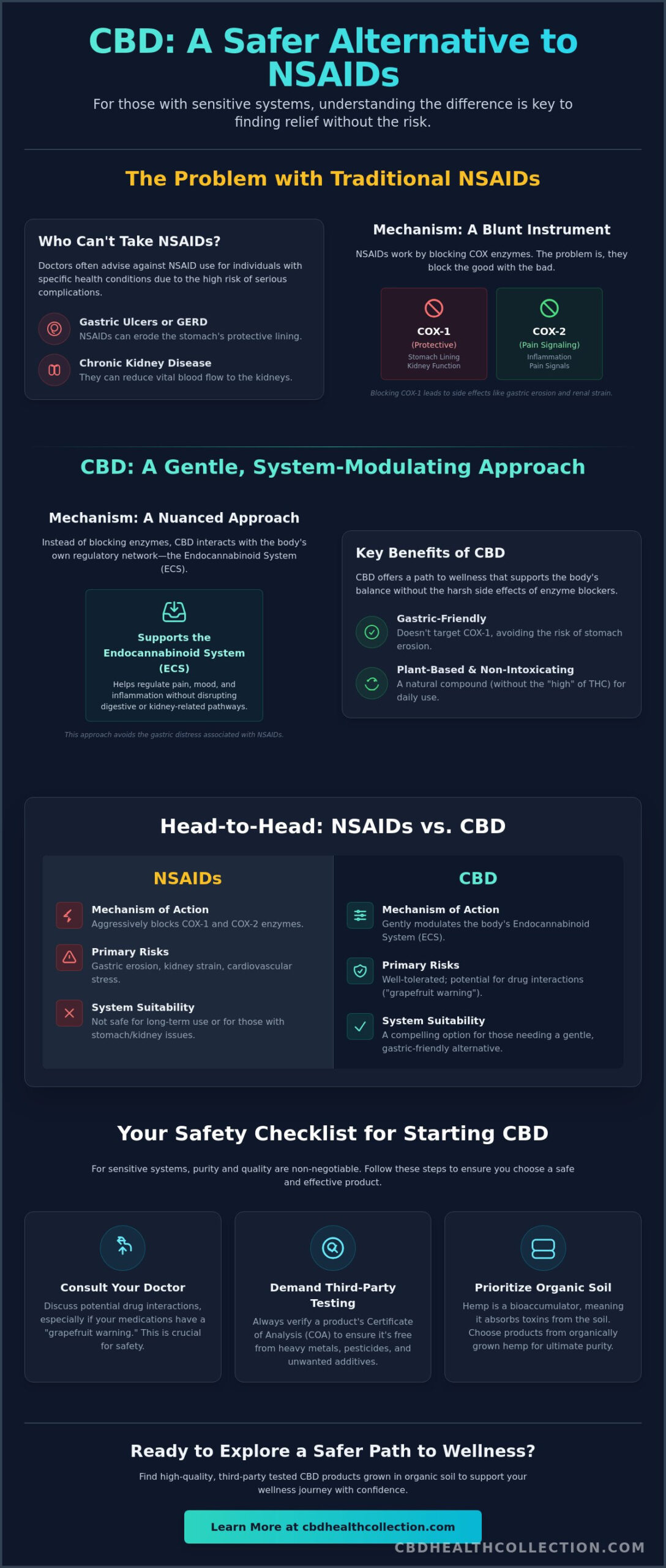
The primary concern with NSAIDs lies in how they interact with your biology. These drugs target two specific enzymes: COX-1 and COX-2. While COX-2 is mostly responsible for pain signals, COX-1 plays a critical role in protecting your stomach lining and supporting blood flow to your kidneys. Traditional NSAIDs usually block both enzymes indiscriminately. Over time, this “blind” inhibition can lead to serious complications that go beyond simple indigestion. Common risks include:
- Gastric Erosion: The breakdown of the stomach’s protective mucus, leading to ulcers.
- Renal Strain: Reduced blood flow to the kidneys, which can be dangerous for those with existing renal issues.
- Cardiovascular Stress: An increased risk of high blood pressure or heart-related events.
In 2026, medical professionals are more cautious than ever about these side effects, leading many to search for non-systemic alternatives that won’t punish the gut.
CBD: A Natural Contender for Inflammation Management
CBD offers a different philosophy for wellness. It’s a plant-based compound that supports the body’s internal regulatory network, known as the endocannabinoid system. Unlike THC, CBD is non-intoxicating and doesn’t create a “high,” making it a practical choice for daily use. Because it doesn’t target the COX-1 enzyme in the same way that traditional pills do, it doesn’t carry the same high risk of stomach erosion. This makes cbd for people who can’t take nsaids a compelling option for those who feel limited by traditional medicine.
Mainstream acceptance of hemp-derived wellness has grown as people seek out cleaner, more sustainable ways to feel better. However, for those with sensitive systems, the source of the product is vital. Hemp is a bioaccumulator, meaning it pulls everything from the soil it grows in, including toxins. You should always prioritize products grown in organic soil and verified by third-party testing. This ensures your path to relief is pure and free from heavy metals or synthetic additives.
CBD vs. NSAIDs: How the Mechanism of Action Differs
To understand why cbd for people who can’t take nsaids is gaining attention, we have to look at how these two substances talk to your body. Most traditional pain relievers act like a blunt instrument, entering the system and aggressively shutting down specific chemical pathways. CBD takes a much more nuanced approach. The Endocannabinoid System (ECS) is the body’s internal balancing system for pain and mood. While traditional meds work by shutting down enzymes entirely, CBD supports this natural regulatory network to help your body maintain a state of equilibrium.
The primary difference lies in the level of “blind” inhibition. NSAIDs are systemic inhibitors. They enter your bloodstream and block COX-1 and COX-2 enzymes without much precision. As we’ve discussed, blocking COX-1 removes the vital shield your stomach uses to protect itself from its own acid. CBD doesn’t interact with these enzymes in the same way. Instead, it modulates how your cells receive and process signals, acting more like a thermostat than a sledgehammer. This subtle modulation is what makes it a viable option for those who have been told to avoid conventional pills.
The COX Enzyme Pathway vs. The Endocannabinoid System
NSAIDs effectively reduce swelling by stopping the production of prostaglandins. The problem is that your body needs those same prostaglandins to keep your gut healthy and your kidneys functioning. In contrast, CBD interacts with the ECS to slow the breakdown of anandamide. This is a natural compound your body already makes to manage physical discomfort and stress. Research from the University of Rochester Medical Center highlights the potential of pain relief with CBD by targeting these unique pathways without the harsh consequences of traditional drugs. It supports your body’s existing tools rather than forcing a chemical change.
Why CBD is Gentler on the Digestive System
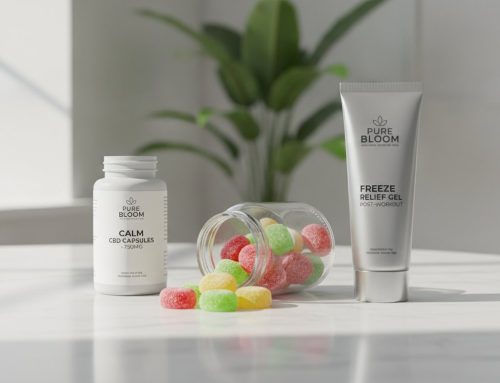
One of the biggest advantages of hemp-derived wellness is its non-gastric absorption path. When you use cbd for people who can’t take nsaids, you aren’t forcing your stomach to deal with corrosive chemicals that eat away at the GI lining. Different delivery methods offer even more flexibility for sensitive users. For example, topicals like a CBD Freeze Gel allow you to target specific joints or muscles without the compound even entering your digestive tract.
If you prefer a systemic approach for overall wellness, our guide on Understanding CBD Products can help you choose between items like gummies or capsules. These options are formulated to be gentle and are processed through the liver rather than lingering in the stomach. This allows you to address inflammation while keeping your digestive health intact. By choosing products that bypass the traditional COX pathway, you’re giving your body the support it needs without the side effects you’ve been told to fear.
Evaluating the Benefits of CBD for Chronic Discomfort
When you can’t rely on a quick pill to dull discomfort, the physical and emotional weight of chronic inflammation can feel overwhelming. Beyond the immediate physical sensation, persistent discomfort often leads to a cycle of poor sleep and rising stress levels. Evaluating the benefits of cbd for people who can’t take nsaids requires looking at the whole person rather than just the localized swelling. Unlike the “as-needed” rhythm of traditional meds, CBD works best when used consistently to support your body’s steady state.
One of the most reassuring aspects of CBD is its safety profile. It has a remarkably low toxicity level and doesn’t possess addictive qualities. This makes it a sustainable option for daily support. While traditional medications are often taken only when the pain becomes unbearable, CBD is most effective as a foundational part of your wellness routine. By maintaining a steady level in your system, you provide your body with the tools it needs to regulate itself before issues escalate.
For those who want to enhance their wellness routine further, molecular hydrogen therapy is another innovative, non-invasive method to help manage inflammation; learn more about how the PureONE home generator supports your body’s natural defense systems.
Managing Inflammation Without the Systemic Risks
The biological impact of CBD goes deep. Research suggests it may help lower pro-inflammatory cytokines. These are the small proteins that act as messengers, telling your body to increase inflammation. By using CBD for pain relief naturally, you’re addressing these signals at their source without the gastric side effects we’ve discussed.
Harvard Health Publishing explores how CBD may offer a means of alleviating pain and inflammation by engaging with the endocannabinoid system. This approach is particularly helpful for long-term maintenance. While you might reach for a fast-acting gel for a specific spot, taking CBD Capsules daily helps build a consistent internal environment. This shift from reactive to proactive care is a major reason why many people are making the switch.
Addressing the Stress-Pain Cycle
There’s a well-documented link between your mental state and how you experience physical discomfort. Chronic pain is mentally draining. When you’re told you can’t use standard over-the-counter tools, that frustration can turn into a cycle of stress and tension. This psychological toll often makes your physical symptoms feel much worse.
CBD helps break this cycle by offering a gentle, calming effect on the nervous system. When your mind is at ease, your perception of pain intensity often decreases. Our guide on using CBD for stress explains how these calming properties support overall wellness. By improving sleep quality and reducing daily tension, CBD helps you regain control. This support is vital because chronic pain often brings other challenges:
- Difficulty falling or staying asleep due to physical discomfort.
- Increased irritability and mental fatigue.
- Muscle tension caused by involuntary guarding or bracing.
It’s a comprehensive approach to cbd for people who can’t take nsaids that looks at your total well-being. You aren’t just treating a symptom; you’re supporting your body’s ability to heal and rest.
How to Safely Start a CBD Regimen When Avoiding NSAIDs
Starting a new wellness routine can feel intimidating, especially when your body has already reacted poorly to traditional medications. Safety is our top priority. The first and most vital step is to speak with your healthcare provider. This is because CBD is metabolized by the CYP450 enzyme system in the liver. This is the same pathway used by over 60% of prescription drugs. If your current medication has a “grapefruit warning,” you must be extra cautious. CBD could change how those medications work in your body. Making cbd for people who can’t take nsaids a safe choice starts with this professional conversation.
Once you have the green light, you need to decide how to get the CBD into your system. This choice depends on where you feel the most discomfort and how your body reacts to different methods. You don’t have to guess; you can start with the method that feels most comfortable for your specific needs. Many people find that a combination of methods works best for their daily rhythm.
Topicals vs. Ingestibles: Which is Right for You?
For many with sensitive stomachs, a CBD cream or gel is the ideal starting point. Since these are applied directly to the skin, they provide localized relief without ever passing through your digestive tract. This eliminates any risk of GI irritation. If you are looking for sustained, whole-body support, CBD gummies or capsules are excellent options. While ingestibles take longer to kick in, usually 45 to 90 minutes, their effects often last much longer than topicals. This makes them better for managing inflammation throughout the entire day.
Understanding Dosage and Potency
When it comes to potency, remember that more isn’t always better. CBD often follows a “bell-shaped” dose-response curve. This means there is a “sweet spot” where you feel the most benefit. If you take too much, the effectiveness might actually decrease. Most beginners find success starting with a range of 10 to 25mg per day. It’s helpful to track your progress in a simple journal. Note down the time you took your serving, the amount, and how you feel on a scale of one to ten. This methodical approach helps you find exactly what your body needs without wasting product or overwhelming your system.
Ready to find your natural balance? Explore our curated selection of pure CBD gummies and topicals to begin your journey safely.
Purity and Quality: Non-Negotiables for Sensitive Systems
Choosing cbd for people who can’t take nsaids isn’t just about finding a replacement. It’s about finding a product that won’t introduce new stressors to your body. Hemp is a unique plant known as a bioaccumulator. This means it acts like a sponge, absorbing everything from the soil where it grows. While this is great for the environment, it can be risky for your health if the soil contains heavy metals, pesticides, or chemical fertilizers. For someone with a sensitive digestive system or kidney concerns, these contaminants are exactly what you need to avoid.
This is why organic soil standards are more than just a label; they are a safety requirement. You should avoid “gas station CBD” or products found in unregulated markets. These often contain synthetic additives or thinning agents that can irritate the gut. Instead, look for a Certificate of Analysis (COA) from a third-party laboratory. This document is your proof that the product is pure. It verifies the exact cannabinoid content and confirms the absence of harmful toxins. In a market moving toward stricter federal limits by November 12, 2026, transparency is the only way to ensure you’re getting a safe, high-quality product.
The Importance of THC-Free Broad Spectrum CBD
For individuals seeking relief without any mind-altering effects, Broad Spectrum CBD is often the best choice. This type of extract includes all the beneficial terpenes and cannabinoids from the hemp plant but has the THC specifically removed. It allows you to experience the synergy of plant compounds working together without the risk of impairment. When you read a lab report, check the “Total THC” section. To remain compliant with the upcoming federal law (P.L. 119-37), finished products must stay below a strict limit of 0.4 milligrams of total THC per container. Choosing a verified broad-spectrum option ensures you stay within these safety boundaries while supporting your wellness goals.
Why CBD Health Collection is the Trusted Choice
At CBD Health Collection, we believe that everyone deserves access to natural comfort, especially those who feel left behind by traditional medicine. We focus exclusively on USA-grown, organic hemp. Our extraction process uses CO2, which is a clean method that doesn’t leave behind any harsh chemical solvents. This commitment to quality ensures that our CBD Gummies, CBD Capsules, and CBD Freeze Gel meet the highest standards of purity. We handle every step of the production lifecycle with care because we know your health depends on it.
You don’t have to settle for persistent discomfort or risky medications. Our mission is to provide a knowledgeable and safe guide for your wellness journey. We invite you to explore our curated collection for gentle, effective relief that respects your body’s needs. Whether you’re looking for systemic support or targeted relief, our transparent testing protocols give you the peace of mind you deserve. Discover the difference that purity makes and take the first step toward a more comfortable life today.
Take Control of Your Wellness Journey Today
Finding relief shouldn’t mean compromising your digestive or kidney health. We have explored how the endocannabinoid system offers a non-gastric path to comfort. By moving away from the systemic inhibition of traditional enzymes, you can support your body’s natural balance. Using cbd for people who can’t take nsaids is a practical way to regain your quality of life without the fear of internal irritation or long-term organ strain.
Our commitment to your safety is reflected in every product we offer. Every gummy, capsule, and gel is organically grown in the USA and undergoes rigorous third-party lab testing to ensure purity. We maintain strict compliance with the 2018 Farm Bill, giving you a reliable and legal path to natural comfort. You don’t have to navigate persistent discomfort alone.
Shop our THC-Free CBD for Natural Relief and discover how botanical support can change your daily rhythm. You deserve to feel your best every single day. We are here to guide you toward a gentler, plant-based way of living that respects your body’s unique needs.
Frequently Asked Questions
Can I take CBD if I have a history of stomach ulcers?
Yes, CBD is generally considered a safe, non-gastric alternative because it doesn’t inhibit the COX-1 enzymes that protect your stomach lining. Traditional pain relievers often erode this protective mucus, but CBD interacts with your endocannabinoid system instead. While it is gentler on the digestive tract, you should still consult your specialist to ensure it fits your specific recovery plan.
Does CBD interact with blood thinners like Warfarin?
Yes, CBD can significantly interact with blood thinners like Warfarin. It is metabolized by the CYP450 enzyme system in the liver, which is the same pathway used by many prescription medications. This interaction can cause medication levels to rise dangerously in your bloodstream. If your prescription has a “grapefruit warning,” you should avoid CBD until you speak with your doctor.
Is CBD as effective as Ibuprofen for inflammation?
CBD works differently than ibuprofen and isn’t a direct, one-to-one substitute for acute pain. While ibuprofen provides fast, temporary relief by blocking enzymes, cbd for people who can’t take nsaids acts as a modulator with effects that are often cumulative. It focuses on supporting long-term balance in the body rather than providing the immediate, heavy-handed numbing effect of traditional over-the-counter pills.
Will CBD show up on a drug test if I use it for pain?
It is possible, though unlikely if you use high-quality broad-spectrum or isolate products. Most drug tests look for THC metabolites rather than CBD itself. However, because the industry moves toward new federal limits of 0.4mg of total THC per container by November 2026, you must rely on third-party lab results. These reports confirm that your product is truly THC-free and safe for your professional requirements.
How long does it take for CBD to start working for joint discomfort?
The time it takes to feel relief depends entirely on how you use the product. A topical CBD Freeze Gel usually begins to work within 15 to 20 minutes because it absorbs directly through the skin to the affected area. Ingestibles like CBD Gummies or capsules must pass through your digestive system, which typically takes 45 to 90 minutes. Consistent daily use helps maintain steady levels for better results.
Can I use CBD topicals and gummies at the same time?
Yes, combining different delivery methods is a common and effective strategy for managing discomfort. You can use a topical gel for fast, localized relief on a specific joint while taking a gummy for sustained, systemic support throughout the day. This multi-layered approach helps address cbd for people who can’t take nsaids by providing both immediate comfort and long-term wellness benefits without irritating your stomach.
What should I look for on a CBD product label to ensure it’s safe?
You should always look for a QR code that leads to a third-party Certificate of Analysis (COA). This report verifies that the product is free from heavy metals, pesticides, and synthetic additives. Ensure the hemp is organically grown in the USA to avoid soil contaminants. Finally, check that the product is labeled as broad-spectrum or isolate to confirm it meets the strict THC-free standards you need.
Why do some people feel nothing when taking CBD for pain?
This often happens because of a “dose gap” between retail products and clinical studies. Many retail servings are 25mg, while some clinical trials use much higher amounts to see significant changes. Additionally, CBD is not an “as-needed” drug like aspirin; it requires time to build up in your system. You may need to use it consistently for several weeks before your endocannabinoid system fully responds.