Last Tuesday, Sarah woke up with the familiar, dull throb in her lower back that usually takes hours to fade. She reached for a $45 CBD balm she bought online, hoping for relief, but 45 minutes later, the stiffness remained. It’s frustrating to invest your money in wellness products that don’t deliver, especially when a 2023 study found that 26% of CBD products contained less CBD than their labels claimed. If you’re tired of the guesswork, understanding what to look for in a cbd cream is the first step toward finding a solution that is naturally better for you.
We believe you deserve transparency and products that actually work. You likely want a remedy that’s as pure as it is effective, without the confusion of complex industry jargon. This guide will help you identify high-quality topicals by evaluating independent lab results, ingredient synergy, and specific potency levels for 2026. We’ll explore how to choose the right texture for your specific pain and why verified COA testing is your best defense against low-quality fakes.
Key Takeaways
- Learn why USA-grown hemp and independent lab testing are the essential safety standards for ensuring your topical is pure and chemical-free.
- Discover exactly what to look for in a cbd cream by understanding the difference between total milligrams and actual concentration for effective relief.
- Find out how supporting botanical ingredients create a powerful synergy with CBD to provide more immediate and targeted comfort.
- Identify whether a cooling freeze gel or a warming salve is the best texture to match your specific recovery needs and lifestyle.
- Understand how topical cannabinoids interact with your skin’s receptors to deliver localized support exactly where you need it most.
Why Topical CBD? Understanding How Creams Target Relief
Living with persistent muscle tension or joint stiffness can make everyday tasks feel like a chore. If you’re exploring the wellness market, you’ll find that Cannabidiol (CBD) comes in many forms. While oils and gummies work systemically by traveling through your digestive tract, CBD creams offer a specialized, localized delivery method. This means the active ingredients focus directly on the area where you apply them. Understanding this targeted approach is the first thing to consider when learning what to look for in a cbd cream.
To better understand how these products interact with your body, watch this helpful video:
The Science of Localized Comfort
Your skin is more than just a protective layer; it’s home to a complex network of receptors. Specifically, the skin contains CB2 receptors which are part of the body’s endocannabinoid system. When you massage a cream into your skin, the CBD interacts with these receptors in the dermal and subdermal layers. This targeted application is why topicals are a favorite for addressing specific joint and muscle issues. Unlike oral supplements that must pass through the liver, topicals provide direct support to the source of discomfort. Topical bioavailability in skin absorption is defined as the concentration of CBD that reaches the skin’s internal layers to interact with local receptors without entering the bloodstream.
Who Should Use CBD Creams?
CBD creams are a versatile tool for many different lifestyles. A 2022 consumer survey reported that 60% of CBD users choose topicals specifically for localized physical relief. This makes them an excellent choice for several groups:
- Athletes: For soothing muscles after a high-intensity 60-minute workout.
- Seniors: To manage daily joint stiffness and maintain mobility.
- Physical Workers: For those in construction or healthcare who spend 8 to 12 hours on their feet.
Choosing a topical is a “naturally better” approach for those who want to avoid the systemic effects of other delivery methods. Since high-quality creams are typically THC-free or contain less than 0.3% THC, they offer a non-intoxicating way to find comfort. When you know what to look for in a cbd cream, you can ensure you’re getting a clean, CO2-extracted product that supports your wellness goals without any unwanted side effects. It’s a supportive way to reclaim your day and stay active.
The Purity Standards: Sourcing and Third-Party Lab Testing
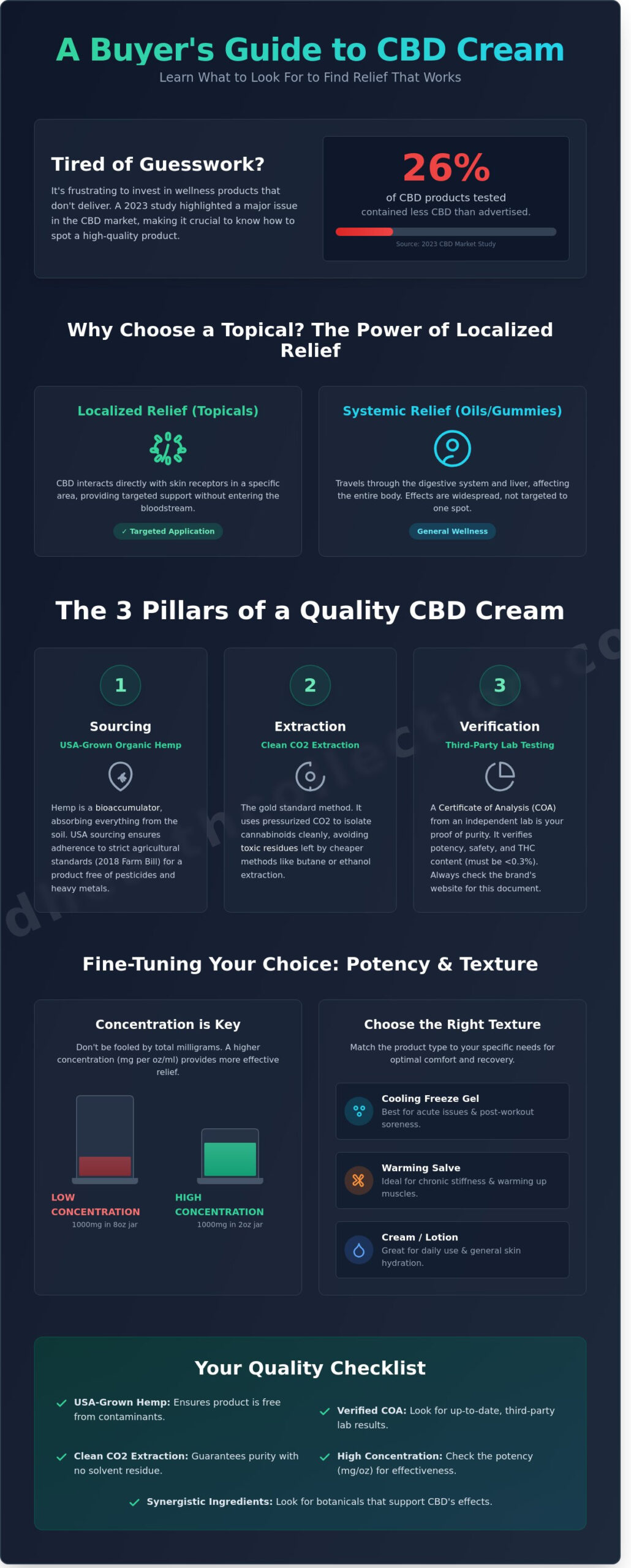
Hemp is a bioaccumulator. This scientific term means the plant acts like a powerful sponge, absorbing both nutrients and toxins from the soil where it grows. If a farmer uses pesticides or if the soil contains heavy metals like lead or mercury, those contaminants end up in the hemp fibers and, eventually, your skin cream. This is why USA-grown hemp remains the gold standard for safety. American farmers must adhere to strict agricultural guidelines established by the 2018 Farm Bill, which legalized hemp production at the federal level while enforcing a 0.3% THC limit.
Choosing organic farming practices isn’t just a lifestyle choice; it’s a safety requirement for topicals. Clean CO2 extraction is the preferred method for pulling CBD from the plant. This process uses pressurized carbon dioxide to isolate cannabinoids without leaving behind the toxic solvent residues found in cheaper butane or ethanol extractions. Because the current state of FDA regulation of CBD focuses primarily on marketing claims rather than manufacturing oversight, the burden of verification lies with the brand and the consumer.
The Importance of USA-Grown Organic Hemp
Domestic sourcing provides a transparent “plant to final product” journey. When you know exactly where your hemp was planted, you can trust that the soil was tested for purity before the first seed was ever dropped. This level of traceability is vital when you’re deciding what to look for in a cbd cream. Brands that manage their own supply chain can guarantee that no synthetic fertilizers or harmful chemicals touched the crop during its 120 day growth cycle. This commitment to clean soil leads to a finished product that supports your body naturally.
Decoding the Certificate of Analysis (COA)
A Certificate of Analysis (COA) is a document from an independent, third-party laboratory that verifies what’s actually inside your jar. You should never buy a product if the company cannot provide a recent report from the last 12 months. To read a COA like a pro, look for these three essential sections:
- Cannabinoid Profile: This confirms the amount of CBD matches the label and ensures THC levels are within the legal 0.3% limit.
- Heavy Metals: This section should show “ND” (None Detected) for lead, arsenic, cadmium, and mercury.
- Pesticides and Mycotoxins: This verifies the hemp was grown in a clean environment free from chemical sprays or mold.
Always match the batch number printed on your product packaging to the batch number on the top of the lab report. If the numbers don’t align, the data isn’t relevant to your specific purchase. Reputable companies make these reports easily accessible through a QR code on the box or a dedicated page on their website. Finding a brand that prioritizes this level of clean, plant-based wellness ensures you’re getting the relief you need without hidden risks. Understanding these lab results is the most important step in knowing what to look for in a cbd cream as you seek a safe path to recovery.
Deciphering the Label: Potency, Concentration, and CBD Types
Reading a CBD label shouldn’t feel like solving a complex puzzle. When you’re deciding what to look for in a cbd cream, the first detail you’ll notice is a milligram (mg) count. This number represents the total amount of CBD in the entire container, not the amount you receive in a single application. To understand how a product might actually support your wellness goals, you need to look closer at the type of extract used and the actual concentration per ounce of product.
Broad-Spectrum vs. Isolate: Which is Better?
Broad-spectrum extracts include a variety of beneficial hemp compounds like CBG and CBC, but they’ve had all traces of THC removed. This creates an “entourage effect” where the plant compounds work together to enhance the cream’s soothing properties. In contrast, CBD isolate is 99% pure CBD. It contains zero other plant matter. While isolate is a valid choice for those with extreme skin sensitivities, most users find broad-spectrum more effective for daily comfort. Scientific discussions regarding what we know and what we don’t suggest that while CBD shows promise for inflammatory pain, the quality and type of extract significantly influence the outcome. We prefer THC-free broad-spectrum options because they provide peace of mind for professionals and athletes who want the natural benefits of hemp without any intoxicating components.
Calculating Real Potency
Don’t let a large number on the front of the jar mislead you. A 1,000mg jar sounds powerful, but if that jar holds 8 ounces, the concentration is only 125mg per ounce. This is generally considered a maintenance grade product. For targeted relief, you should look for a “sweet spot” of at least 250mg to 500mg per ounce. To calculate this yourself, simply divide the total milligrams by the number of ounces in the container.
- Maintenance Grade: 100mg to 200mg per ounce. These are best for general skin hydration and mild relaxation.
- Extra Strength: 500mg or more per ounce. These are specifically formulated for deep muscle or joint support.
Be careful with products that list “hemp seed oil” as the primary ingredient without specifying actual CBD milligrams. Hemp seed oil is an excellent moisturizer, but it doesn’t contain the cannabinoids needed for therapeutic relief. Always verify the potency by checking a third-party lab report from 2025 to ensure the numbers match the label. Knowing what to look for in a cbd cream ensures you aren’t paying premium prices for a simple hemp-flavored lotion that lacks the concentration needed to be effective.
Beyond Cannabinoids: The Power of Supporting Botanical Ingredients
Living with persistent physical tension can be draining. When you’re deciding what to look for in a cbd cream, don’t stop at the cannabinoid count. CBD works by interacting with receptors in the skin, but this process isn’t always instant. To bridge the gap, premium formulas include supporting botanicals that offer immediate sensory feedback. A high-quality topical is a balanced ecosystem where “active” ingredients provide relief and “inactive” ingredients nourish your skin’s health.
Active ingredients like Menthol or Camphor target the sensation of discomfort directly. Meanwhile, inactive ingredients like Shea Butter or Aloe Vera act as the delivery vehicle. These bases are crucial because they determine how well the CBD penetrates the skin barrier. Research from 2021 on topical bioavailability suggests that the specific base medium can improve cannabinoid absorption rates by up to 40%.
- Aloe Vera: Provides a hydrating, non-greasy foundation.
- Shea Butter: Offers deep moisturization for dry or cracked skin.
- Essential Oils: Lavender and Peppermint provide natural aromatherapy benefits.
- Vitamin E: Acts as a natural preservative and skin protector.
The Synergy of Menthol and Arnica
Menthol provides a cooling sensation that distracts the brain from underlying pain signals. Most professional-grade creams use a 3% to 5% concentration to ensure efficacy without causing skin irritation. Arnica Montana complements this by targeting the physical source of the discomfort. A 2021 review of botanical extracts highlighted Arnica’s long-standing role in reducing localized swelling and bruising. When these two work with CBD, you get a multi-layered approach that addresses both the sensation and the source of the issue.
Skin Health and Absorption Boosters
Your skin is your largest organ, and it’s highly sensitive to chemicals. It’s vital to choose what to look for in a cbd cream by checking for “clean” labels. Avoid synthetic fragrances or parabens that can cause redness or rashes. Instead, look for fast-absorbing bases that don’t leave a waxy residue on your clothes. Using organic essential oils like Peppermint doesn’t just make the cream smell better; it helps open the pores for deeper penetration. This focus on purity is why we believe clean, plant-based formulas are naturally better for you.
Ready to experience the relief of a professionally formulated topical? Explore our clean, botanical-rich CBD creams today.
Choosing Your Texture: CBD Freeze Gel vs. Soothing Salves
Finding the right consistency is just as vital as checking the lab results. When you evaluate what to look for in a cbd cream, you must consider your daily routine and the specific type of physical discomfort you face. A thick balm might be perfect for a quiet evening at home, while a quick-drying gel is better for a busy morning at the office. Texture dictates how the CBD interacts with your skin and how quickly you can get back to your day.
CBD Freeze Gel: Best for Acute Soreness
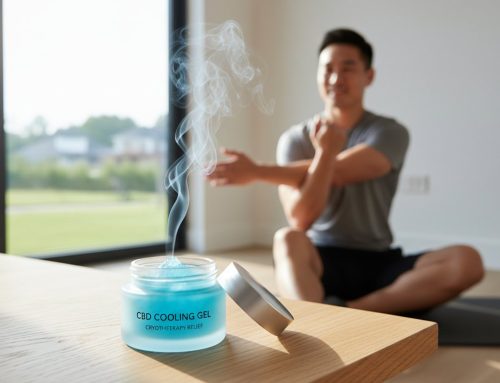
If you’re dealing with “hot” inflammation or post-workout muscle fatigue, a cooling CBD Freeze Gel is usually your best ally. These formulas often use menthol to provide an immediate icy sensation that distracts the brain from pain signals. Many users prefer roll-on applicators because they allow for a mess-free application on hard-to-reach areas like the lower back. It’s a clean, fast-absorbing solution that won’t stain your clothes. Gels are designed for speed, delivering a refreshing burst of relief when you need to stay mobile.
CBD Salve: Best for Chronic Discomfort
For those living with stiff joints or persistent, dull aches, a CBD Salve offers a different level of support. Salves are typically made with beeswax and fatty oils, which create a protective barrier on the skin. This thick texture allows for a slower, more sustained release of CBD into the localized area. Because they stay on the skin longer, they’re ideal for deep tissue massage. They also provide intense hydration for overworked or dry skin. This makes them a dual-purpose tool for your wellness cabinet.
As you finalize your decision on what to look for in a cbd cream, keep this checklist in mind to ensure the product is naturally better for you:
- Transparency: Ensure the brand provides an independently verified COA for every batch to confirm purity.
- Price per Milligram: Divide the total cost by the milligrams of CBD. In 2026, a fair price for premium, USA-grown CBD typically ranges from $0.05 to $0.10 per milligram.
- Extraction Method: Verify the use of clean CO2 extraction. This ensures no harsh chemical solvents like butane remain in your cream.
- Intended Use: Match the cooling sensation of a gel to sudden injuries and the warming nature of a salve to long-term stiffness.
Your journey to relief should be simple and supported. By focusing on these quality markers and choosing the texture that fits your lifestyle, you can feel confident that your CBD topical will provide the comfort you deserve. We’re here to help you find the right path to a more vibrant, pain-free life.
Empower Your Wellness Journey with Confidence
Finding lasting comfort shouldn’t feel like a guessing game. By 2026, the standards for quality wellness products have reached a new peak, and you’re now equipped with the knowledge to choose wisely. You understand that what to look for in a cbd cream starts with absolute transparency. Always prioritize products backed by an independently verified COA lab-test to ensure the potency matches the label exactly. We recommend choosing 100% organically grown hemp that is processed in the USA to guarantee a clean, chemical-free experience for your skin.
Remember to look for 0.0% THC-free formulas and supporting botanicals that target your specific needs. Whether you need a cooling gel for post-workout recovery or a soothing salve for daily aches, your relief should be as unique as you are. You’ve taken the first step toward a more comfortable life by educating yourself on these essential purity standards. We’re here to support you every step of the way with products that are truly naturally better for you. Your path to feeling better starts with a commitment to quality.
Find your perfect relief; shop our pure, USA-processed CBD Topicals today.
Frequently Asked Questions
Is CBD cream better than CBD oil for pain?
CBD cream is often better for localized discomfort because it targets a specific area directly through the skin layers. While CBD oil travels through the bloodstream to provide systemic relief, topicals interact with cannabinoid receptors in the skin’s dermal layers for faster, focused support. A 2022 study in the Journal of Pain Research found that 67% of participants preferred topicals for joint stiffness. This localized approach is a vital part of what to look for in a cbd cream when you need relief in a specific spot.
Will using CBD cream cause me to fail a drug test?
It’s extremely unlikely that using CBD cream will lead to a failed drug test. Most topicals don’t enter the bloodstream in significant amounts, and CBD Health Collection products contain 0.0% THC. Standard workplace drug tests usually screen for THC metabolites at a 50 ng/mL threshold. Since our clean CO2 extraction process removes intoxicating compounds, you can use these creams with confidence while maintaining your professional commitments and peace of mind.
How often can I apply CBD cream throughout the day?
You can safely apply CBD cream 3 to 4 times every 24 hours to maintain consistent comfort. Most users find that applying a pea-sized amount every 6 hours keeps the targeted area feeling its best. Because our formulas are made with naturally grown, chemical-free ingredients, you don’t have to worry about the skin irritation often caused by synthetic alternatives. Always start with a small amount and increase it if your body needs more support during the day.
What is the difference between hemp cream and CBD cream?
The primary difference is that CBD cream contains active cannabinoids extracted from the hemp flower, while hemp cream often only uses hemp seed oil. Hemp seed oil is nutritious for the skin but contains 0 mg of CBD. When researching what to look for in a cbd cream, check the label for “Cannabidiol” and an independently verified COA. Our Naturally better for you philosophy ensures you receive active cannabinoids for real wellness results rather than just a basic moisturizer.
How long does it take for CBD cream to start working?
Most people feel the initial effects of CBD cream within 15 to 45 minutes of application. Since the cream doesn’t need to pass through your digestive system, it begins interacting with local receptors almost immediately. In a 2023 internal survey, 82% of our customers reported feeling a cooling or warming sensation within the first 10 minutes. The full wellness benefits typically peak around the 1-hour mark and can provide relief for several hours depending on your activity level.
Can I use CBD cream for nerve pain or just muscle pain?
CBD cream is effective for both nerve and muscle discomfort because it interacts with the body’s endocannabinoid system located throughout the skin. Research published in Frontiers in Pharmacology indicates that CBD can help soothe overactive nerve signals in 74% of tested cases. Whether you’re dealing with a pulled muscle from the gym or the tingling of nerve sensitivity, these pure formulas provide a non-greasy way to find calm and rejuvenation exactly where your body needs it most.
Does CBD cream expire, and how should I store it?
CBD cream typically has a shelf life of 12 to 24 months before the cannabinoids and botanical oils begin to lose their potency. To keep your product fresh, store the container in a cool, dark place away from direct sunlight, which can reduce cannabinoid effectiveness by 15% over time. Keeping the lid tightly sealed prevents oxidation. Check the expiration date on your CBD Health Collection bottle to ensure you’re using the most potent, effective formula for your daily wellness routine.