Living with persistent pain can feel like an isolating battle, impacting everything from your daily routine to your overall quality of life. If you’re searching for a gentler, more natural path to comfort-one without the concerns that often accompany traditional medications-you’ve come to the right place. The world of CBD for pain relief can seem complex, but finding a pure and effective solution doesn’t have to be overwhelming. We understand your desire for clarity, safety, and genuine results.
This comprehensive guide is designed to be your trusted resource on the path to natural well-being. We will walk you through the science of how CBD interacts with your body to ease discomfort, explore the different types of quality products available, and empower you with the knowledge to choose a safe, clean, and effective option for your wellness journey. Our goal is to help you move from uncertainty to confidence, finding the natural comfort you deserve.
How CBD Interacts with Your Body’s Pain Signals
To understand how cannabidiol (CBD) helps manage discomfort, we first need to look at its source. CBD is a natural, non-intoxicating compound derived from the organically grown hemp plant. Unlike its well-known cousin, THC, it does not produce a “high,” making it a safe and appealing option for those seeking wellness support. For a comprehensive overview of cannabidiol and its scientific background, it’s helpful to explore its unique properties. The secret to its effectiveness lies in how it works with a remarkable internal network: the Endocannabinoid System.
The Endocannabinoid System (ECS): Your Body’s Master Regulator
Think of the Endocannabinoid System (ECS) as your body’s internal balancing act. This complex cell-signaling system is active in everyone, even if you don’t use cannabis. Its primary job is to maintain homeostasis, or stability, by regulating crucial functions like pain perception, mood, sleep, and immune response. The ECS has three core components:
- Endocannabinoids: Natural molecules produced by your body that are similar to cannabinoids.
- Receptors (CB1 and CB2): Found throughout the body, they are the “locks” that endocannabinoids bind to, signaling that the ECS needs to take action.
- Enzymes: Responsible for breaking down endocannabinoids once they’ve carried out their function.
When you use CBD, you are supporting this vital system, potentially helping it manage pain signals more effectively and restore optimal health.
CBD vs. THC for Pain: Understanding the Key Differences
While both CBD and THC come from the cannabis plant, they interact with your ECS in fundamentally different ways. THC binds directly to CB1 receptors, primarily found in the brain, which is what causes the intoxicating “high.” CBD, on the other hand, has a more indirect influence. It doesn’t bind strongly to CB1 receptors, so it won’t cause intoxication. Instead, it is believed to encourage your body to use its own endocannabinoids more effectively. This is why many people prefer THC-free broad-spectrum CBD products for daily comfort and relief without any psychoactive effects.
The Anti-Inflammatory Potential of CBD
Chronic inflammation is a root cause of many types of persistent pain, including joint discomfort and arthritis. A growing body of research suggests that CBD may possess powerful anti-inflammatory properties. By interacting with ECS receptors involved in the immune system, CBD may help reduce the production of inflammatory markers in the body. This calming effect on the immune response is a key reason why using cbd for pain relief has become a primary focus for those seeking a natural approach to managing conditions linked to inflammation, promoting greater comfort and joint flexibility.
Matching the CBD Product to Your Type of Pain
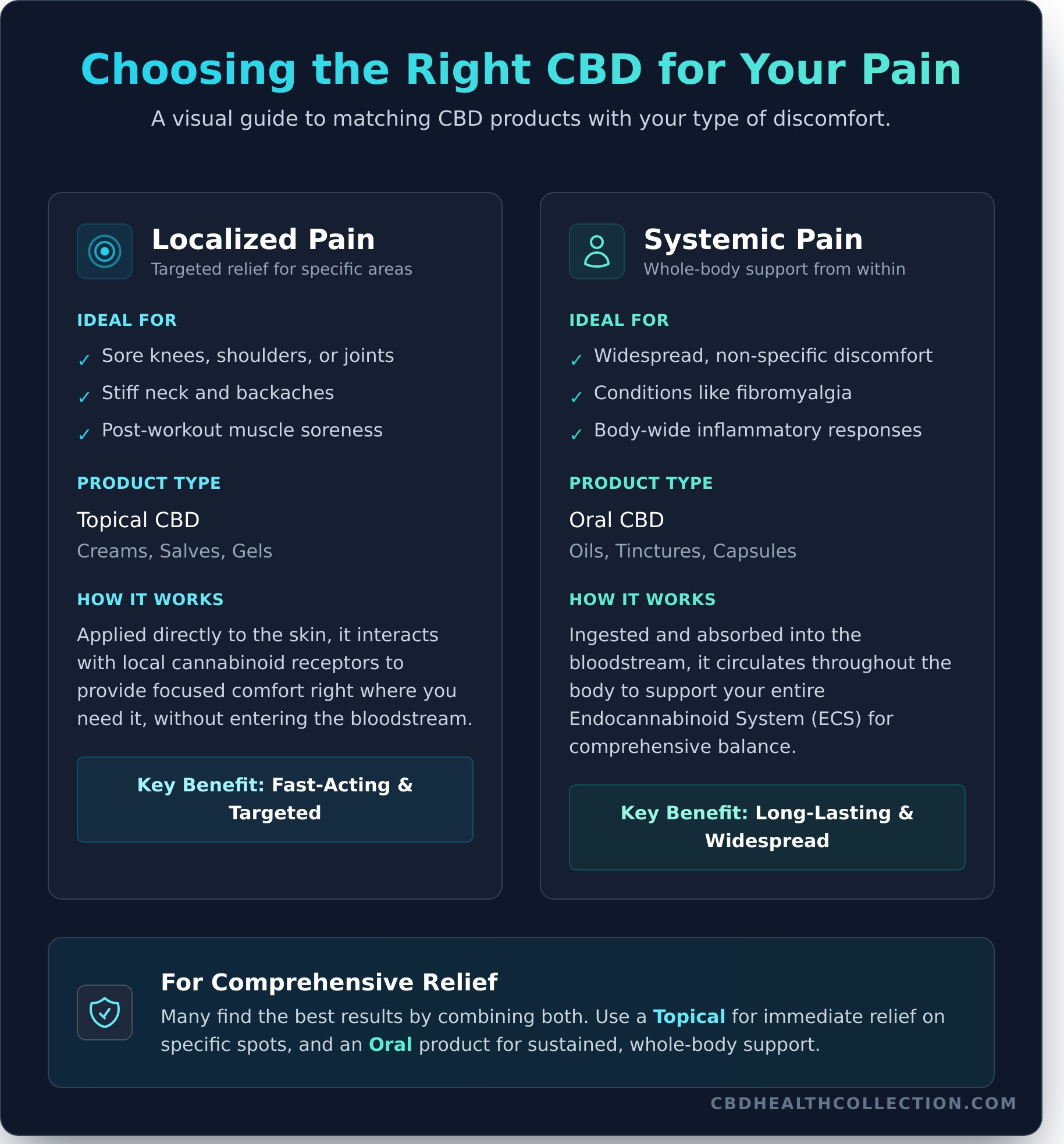
Finding effective cbd for pain relief starts with understanding that not all pain is the same. Just as you wouldn’t use the same remedy for a headache as you would for a sore muscle, the right CBD product depends on the nature of your discomfort. The key is to identify whether your pain is localized to a specific area or systemic, affecting your entire body.
To help you choose with confidence, we’ve broken down the two primary categories of pain and the CBD formats best suited to address them.
Topical CBD for Localized Relief (Creams, Salves, Gels)
If you can point to exactly where it hurts-like a sore knee, an aching shoulder, or a stiff neck-topical CBD is an excellent choice. These products are applied directly to the skin, where they interact with endocannabinoid receptors in the surrounding tissues. This method provides targeted comfort right at the source without entering your bloodstream, often resulting in fast-acting relief. See how our CBD Freeze Gel offers targeted, cooling comfort for muscles and joints.
Oral CBD for Systemic Relief (Capsules & Oils)
For pain that is widespread, internal, or stems from body-wide inflammation, an ingestible CBD product is generally more effective. When you take CBD oil or capsules, it enters your bloodstream and travels throughout your body, interacting with your endocannabinoid system on a systemic level. While the science on cannabinoids for pain is continually evolving, this method is preferred for conditions that aren’t confined to one spot. The effects take longer to set in but typically last for several hours.
For even faster systemic relief, some users prefer inhaling CBD through vaping. This method delivers the compound directly to the lungs for rapid absorption into the bloodstream. If this approach interests you, specialty retailers like Vape Center offer a variety of CBD vaping products designed for wellness purposes.
Which Form is Best for You? A Quick Guide
Choosing the right format can feel overwhelming, but a simple guideline can help. Consider your primary source of discomfort:
- For localized pain like arthritis in a single joint or post-workout soreness, start with a Topical CBD product.
- For systemic pain such as fibromyalgia or widespread inflammatory conditions, an Oral CBD product is often the better starting point.
Many people find the most comprehensive relief by using both. You can apply a topical for immediate comfort on a specific joint while taking an oil or capsule for long-lasting, whole-body support. Ultimately, your body is unique, and a little experimentation will help you discover the most effective method for you.
A Step-by-Step Guide to Using CBD for Pain Safely
Your journey to wellness should be a positive one from the very first step. When exploring CBD for pain relief, starting safely is the key to finding what works best for you. The universal mantra in the CBD community is to “start low and go slow.” This methodical approach allows you to listen to your body and discover the most effective and comfortable routine without overdoing it.
Finding Your Effective Dosage
There is no one-size-fits-all dosage for CBD. Your ideal amount depends on several personal factors, including your body weight, metabolism, and the severity of your pain. A good starting point for most people is a low dose of 5-10mg once or twice a day. Maintain this dose for a few days while keeping a simple journal to track how you feel. If you don’t achieve the desired relief, you can gradually increase the dose by 5mg every few days until you find your optimal amount.
How to Read a Certificate of Analysis (COA)
A reputable CBD product will always be backed by a Certificate of Analysis (COA) from an independent, third-party laboratory. This is your guarantee of purity and potency. When you review a COA, look for two key things:
- Cannabinoid Potency: Verify that the amount of CBD listed matches what’s advertised on the label.
- Contaminant Screening: Ensure the product is clean and has passed tests for harmful contaminants like heavy metals, pesticides, and residual solvents.
At CBD Health Collection, we believe in complete transparency. You can find up-to-date lab reports for all our pure, clean products on our website, cbdhealthcollection.com.
Potential Side Effects and Drug Interactions
CBD is generally well-tolerated, and most reported side effects are mild, such as fatigue, dry mouth, or changes in appetite. However, it’s crucial to be informed. While ongoing studies are clarifying what the science says about CBD, we know that it can interact with certain medications, similar to the “grapefruit effect.” This is because it can affect how your body metabolizes some prescription drugs.
For this reason, it is essential to consult with your doctor or a qualified healthcare professional before starting any CBD regimen, especially if you have pre-existing health conditions or are taking other medications. Your safety is always the top priority.
What the Science Says About CBD and Pain Management
While personal stories of success abound, it’s essential to approach the topic of cbd for pain relief with a clear understanding of the scientific evidence. The body of research is growing and highly promising, yet much of it remains in preliminary stages. Scientists are actively investigating how CBD interacts with the body’s endocannabinoid system to help regulate pain signaling and inflammation, but more large-scale, placebo-controlled human trials are needed to draw firm conclusions.
Here is a look at what the current research suggests in a few key areas.
Research on CBD for Arthritis and Joint Pain
Some of the most encouraging early research focuses on inflammatory discomfort. Preclinical studies using animal models have suggested that topical CBD may help reduce inflammation and pain-related behaviors associated with arthritis. Furthermore, surveys from organizations like the Arthritis Foundation indicate that many patients self-report noticeable improvements in their comfort after using CBD. These findings are a strong foundation for future clinical trials in humans.
Studies on Neuropathic (Nerve) Pain
Neuropathic pain, which stems from nerve damage, is notoriously difficult to manage with conventional approaches. Early research suggests CBD’s potential in this area may come from its interaction with receptors beyond the endocannabinoid system, such as glycine and serotonin receptors, which play a crucial role in how our bodies perceive pain. This complex mechanism makes it an area of significant scientific interest.
Full-Spectrum, Broad-Spectrum, and Isolate: Does it Matter for Pain?
When selecting a product, the type of CBD extract is an important consideration. Understanding the difference can help you choose the most effective option for your wellness goals.
- Full-Spectrum CBD: Contains all beneficial compounds from the hemp plant, including cannabinoids, terpenes, and trace amounts of THC (less than 0.3%).
- Broad-Spectrum CBD: Includes a wide range of cannabinoids and terpenes but has all detectable amounts of THC removed.
- CBD Isolate: This is the purest form of CBD, with all other plant compounds stripped away.
Many experts advocate for the “entourage effect,” a theory suggesting that cannabinoids and terpenes work together synergistically, enhancing each other’s effects. For those wanting to experience this synergy without THC, broad-spectrum CBD offers a perfect balance. At CBD Health Collection, our products use premium broad-spectrum CBD to provide maximum benefit while remaining completely THC-free.
Your Path to Natural Comfort and Wellness
As we’ve explored, CBD offers a promising, natural avenue for managing discomfort by interacting with your body’s own pain-signaling systems. The key to success lies in understanding your specific needs-matching the right product to your pain and following a safe, consistent routine. While research continues to unfold, the science supports using cbd for pain relief as part of a holistic wellness plan, which often includes gentle, strengthening exercise. For women seeking guided workouts to improve joint support and overall fitness, the Nuli App can be an excellent resource.
A holistic approach also considers your environment. Creating a beautiful, functional living space can significantly reduce stress and contribute to overall well-being. For those looking to refresh their home, professional Cabinet refinishing Denver is one way to transform a key area like the kitchen without the overwhelm of a full remodel.
Starting this journey requires trust and transparency. At CBD Health Collection, we are committed to the highest standards of quality. Our products are derived from organically grown, USA-processed hemp and purified using a clean, chemical-free CO2 extraction process. For your peace of mind, every batch is confirmed for purity and potency through independently verified COA lab-testing.
Find the right lab-tested CBD product with confidence. Your journey toward natural comfort begins with a single, informed step, and we’re here to help you take it.
Frequently Asked Questions About CBD for Pain Relief
How long does it take for CBD to work for pain?
The time it takes for CBD to provide comfort depends on the product type. Sublingual tinctures can be felt within 15 to 45 minutes as they are absorbed directly into the bloodstream. In contrast, edibles and capsules must pass through the digestive system, so effects may take 45 to 90 minutes. Topical creams applied directly to the skin often provide localized relief within 15 to 30 minutes. Choosing the right method depends on your need for immediate versus sustained support.
Will I feel ‘high’ when using CBD products for pain relief?
No, you will not feel ‘high’ from our CBD products. CBD (cannabidiol) is a non-intoxicating compound, unlike THC, which causes psychoactive effects. Our pure, high-quality products are derived from organically grown hemp and contain less than 0.3% THC, as verified by independent lab testing. This ensures you can experience the wellness benefits of CBD for comfort and relief without any intoxicating sensations, allowing you to maintain complete clarity and focus throughout your day.
Is it legal to purchase and use CBD for pain in the United States?
Yes, purchasing and using hemp-derived CBD is federally legal in the United States, thanks to the 2018 Farm Bill. This legislation legalized hemp products that contain no more than 0.3% THC. All CBD Health Collection products are fully compliant with this federal standard, ensuring they are both legal and non-intoxicating. However, we always recommend checking your specific state and local regulations, as some laws may vary slightly from the federal guidelines for consumer protection.
Can I use CBD for pain alongside my current prescription medications?
Your safety is our highest priority. While many people use CBD to support their wellness routines, it can interact with certain prescription medications by affecting how your body metabolizes them. This is particularly important for medications with a “grapefruit warning.” Before adding CBD to your regimen for pain management, it is essential to consult with your doctor or a qualified healthcare professional. They can provide personalized advice based on your health history and current prescriptions.
What is the difference between hemp seed oil and CBD oil for pain?
While both come from the same plant, they are very different. Hemp seed oil is pressed from hemp seeds and contains no cannabinoids like CBD; it’s a nutritional oil rich in omega fatty acids. CBD oil is extracted from the plant’s flowers, leaves, and stalks, which are rich in cannabinoids. It is the cannabinoids in CBD oil that interact with your body’s endocannabinoid system, making it the correct choice when seeking cbd for pain relief and other therapeutic benefits.
How often should I apply CBD cream or take CBD capsules for chronic pain?
For managing chronic pain, consistency is often key. CBD capsules are typically taken once or twice daily to maintain a steady level of cannabinoids in your system. For more immediate, localized discomfort, a CBD cream can be applied directly to the affected area as needed, usually 2-3 times per day. We always recommend starting with a lower dose and gradually adjusting based on your body’s response to find what provides you with optimal comfort and support.
Can I build up a tolerance to CBD for pain relief?
Current research suggests that building a significant tolerance to CBD is unlikely, which is a notable difference from many other compounds. Unlike THC, CBD interacts with the endocannabinoid system in a way that does not typically lead to diminished effects over time. In fact, some users report experiencing “reverse tolerance,” where they find they can achieve the same level of comfort with a smaller dose after consistent use, making it a sustainable wellness option.