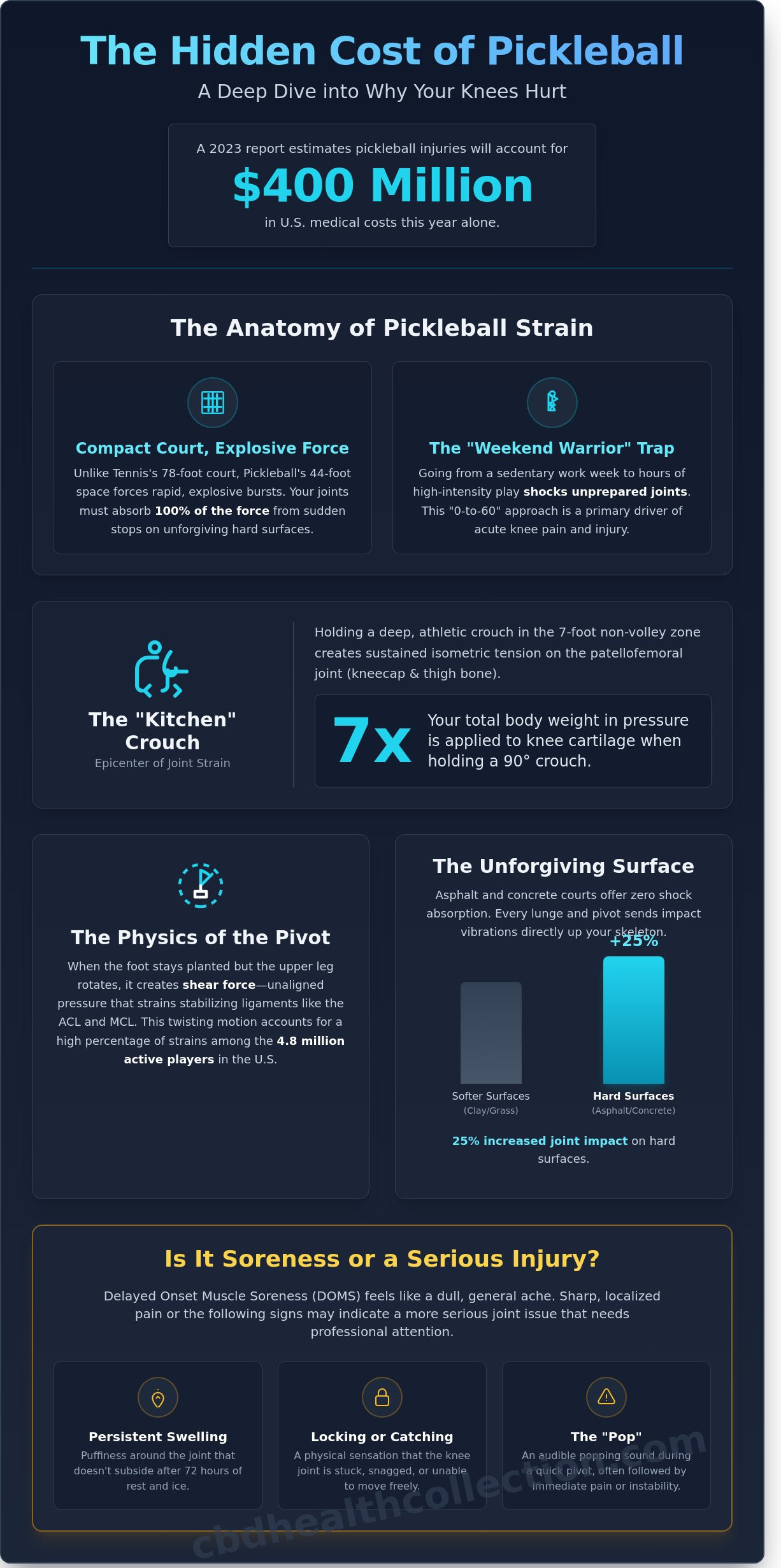
A 2023 report published in the Journal of Emergency Medicine estimates that pickleball injuries will account for nearly $400 million in medical costs this year. For many players, that cost isn’t just financial; it’s the physical toll of knee pain from Pickleball that keeps them sidelined. You love the community and the competition. However, waking up with stiff, achy joints the morning after a match makes you wonder how much longer you can keep playing. It’s frustrating when a sharp pain during a lateral lunge stops you from chasing down that winning shot.
We understand that living with persistent discomfort is exhausting. That’s why we’ve developed a natural recovery protocol to help you find relief and protect your long-term joint health. You’ll learn exactly why these injuries happen and how to implement a routine that’s naturally better for you. This guide covers everything from an effective 5-minute warm-up to a post-match recovery plan designed to keep you on the court for years to come.
Key Takeaways
- Understand how the unique mechanics of the “Kitchen” crouch and explosive movements impact your joints differently than other court sports.
- Learn how to distinguish between common muscle soreness and the six critical warning signs that indicate a more serious joint injury.
- Discover a natural recovery protocol designed to manage knee pain from Pickleball, helping you return to the game with confidence and comfort.
- Explore clean, plant-based alternatives to traditional over-the-counter pain relievers that support your body’s long-term wellness and performance.
- Identify the essential on-court gear and dynamic warm-up exercises that protect your knees from the repetitive stress of high-performance play.
Why Pickleball Is Hard on Your Knees: The “Kitchen” Mechanics
Living with persistent pain can be exhausting, especially when it keeps you off the court. While many people search for What is Pickleball? to understand the basic rules, they often overlook the specific physical toll this sport takes on the lower body. Unlike tennis, which involves longer sprints across a 78-foot court, pickleball is played in a compact 20-by-44-foot space. This smaller area creates a game of rapid, explosive bursts rather than long-distance running. These quick movements are a primary cause of knee pain from Pickleball, as your joints must absorb 100% of the force from sudden stops on unforgiving hard surfaces.
The “Kitchen,” or the seven-foot non-volley zone, is where the most intense joint strain occurs. To stay competitive during a dink rally, players maintain a deep, athletic crouch for several minutes at a time. This position creates sustained isometric tension on the patellofemoral joint, which is the interface between your kneecap and thigh bone. When you hold your knees at a 90-degree angle, the pressure on your cartilage can increase by 7 times your total body weight. Over a typical two-hour session, this cumulative stress leads to the inflammation and “grinding” sensation many players describe after a long day of play.
To better understand the mechanics of these movements and how they affect your body, watch this helpful video:
The Physics of the Pivot
The rhythm of the game relies on a “stop-and-start” pattern that frequently causes micro-trauma in the tendons. When you lunge laterally for a ball, your ACL and MCL work overtime to stabilize the knee against sideways forces. Shear force in a pickleball pivot is the unaligned pressure that occurs when the foot remains fixed on the court surface while the femur rotates forcefully over the tibia. This twisting motion accounts for a high percentage of ligament strains among the 4.8 million active players in the United States today.
Age and Joint Resilience
As we age, our bodies naturally produce less synovial fluid, which is the thick liquid that cushions the ends of the bones. By age 50, many players experience a thinning of this fluid, making the meniscus more susceptible to fraying and wear. Many enthusiasts fall into “Weekend Warrior” syndrome, where they go from a sedentary work week to 4 hours of high-intensity play on Saturday morning. This 0-to-60 approach doesn’t allow the joints to warm up properly, which is why knee pain from Pickleball often feels worse the morning after a tournament.
Most matches occur on asphalt or concrete courts. These surfaces are designed for consistent ball bounce, but they offer zero shock absorption for your skeleton. Every step sends a vibration directly up your legs. Research shows that playing on these hard surfaces increases joint impact by 25% compared to softer options like clay or grass. This constant pounding, combined with the lateral shifting required at the net, makes knee health a top priority for anyone looking to stay active in the sport for years to come.
Identifying Your Pain: Is It Just Soreness or a Serious Injury?
Living with persistent knee pain from Pickleball can be exhausting. You love the game, but the morning after a long session often brings a stiff, aching reminder of every lateral lunge and overhead smash. It’s vital to know if you’re feeling standard muscle fatigue or a more serious issue that needs professional attention. Distinguishing between the two is the first step toward a safe recovery.
Muscle soreness, often called Delayed Onset Muscle Soreness (DOMS), typically appears 24 to 48 hours after exercise. It feels like a dull, tender ache in the muscles surrounding the joint. Joint inflammation is a different experience. It feels sharp, localized, or hot to the touch. If you notice these 6 warning signs, your body is telling you that the issue is more than just a hard workout:
- Persistent swelling: Puffiness that doesn’t subside after 72 hours of rest and icing.
- Locking or catching: A physical sensation that the joint is stuck or snagged during movement.
- The “Pop”: An audible sound during a quick pivot followed by immediate discomfort.
- Instability: A frightening feeling that your knee might “give out” or buckle while walking.
- Night pain: Discomfort that is severe enough to wake you from sleep or prevent you from getting comfortable.
- Limited range: An inability to fully straighten or bend your leg compared to the other side.
If you experience any of these red flags, consulting an orthopedic specialist is the safest choice. They can use imaging to check for structural damage. However, if your discomfort is mild and manageable, you can often find relief through home care and natural wellness routines. Addressing knee pain from Pickleball early is the best way to ensure you don’t spend the season on the sidelines.
Common Pickleball Knee Conditions
Many players use the term “Pickleball Knee” as a catch-all for patellar tendonitis. This condition is an overuse injury affecting the tendon that connects your kneecap to your shinbone. It’s especially common because of the constant jumping and sudden stops required in the transition zone. Meniscus tears are another frequent issue, often occurring when you twist your knee while your foot is firmly planted on the court. For players over age 55, osteoarthritis is a common culprit, characterized by a “grinding” sensation during deep dinks or squats.
The Inflammation Cycle
Every time you step onto the court, the repetitive impact creates tiny micro-tears in your connective tissues. This triggers your body’s natural inflammatory response. While this process is designed to help you heal, constant play without adequate rest leads to a cycle of chronic degradation. Acute inflammation is the body’s immediate, healthy response to a specific injury, while chronic inflammation is a persistent, low-grade fire that slowly wears down your joint tissues over time. Over several years, this can lead to the breakdown of vital cartilage.
Research from fitness professionals suggests that preventing pickleball injuries requires a proactive approach to recovery and biomechanics. A 2023 analysis of sports injuries noted that lower extremity strains make up a significant portion of court-related clinic visits. You don’t have to be part of that statistic. Finding natural ways to support joint comfort can help you manage the daily wear and tear of the game. We believe in a pure, clean approach to wellness that keeps your body moving the way nature intended.
Natural Relief Strategies: Moving Beyond Traditional NSAIDs
Dealing with knee pain from Pickleball shouldn’t mean a permanent reliance on the medicine cabinet. While over-the-counter NSAIDs like ibuprofen provide quick relief, the FDA warns that using these medications for more than 10 consecutive days increases the risk of stomach bleeding and kidney strain. For many players, these pills are a temporary fix that masks the problem rather than supporting the body’s natural healing process. Relying on them daily can lead to a cycle of dependence that ignores the underlying inflammation.
The traditional “RICE” method (Rest, Ice, Compression, Elevation) is also evolving. A 2012 study published in the British Journal of Sports Medicine suggests that total rest can actually lead to muscle atrophy and stiffer joints. Instead of staying on the couch for days, many athletes now prioritize “Active Recovery.” This involves low-impact movement to circulate synovial fluid, which acts as a natural lubricant for your joints. Movement is medicine when it’s done correctly. Consider these recovery alternatives to keep your joints mobile:
- Gentle Cycling: 15 minutes on a stationary bike with low resistance helps flush out metabolic waste.
- Compression Sleeves: These improve proprioception and reduce swelling during and after play.
- Dynamic Stretching: Controlled movements like leg swings increase blood flow to the tendons.
The Case for Botanical Support
Botanical topicals offer a targeted way to manage discomfort without the systemic side effects of oral pills. Menthol provides a cooling sensation by blocking calcium channels in sensory neurons, offering immediate relief within minutes of application. When paired with CBD, it creates a dual-action approach. CBD interacts with the body’s endocannabinoid system to promote a sense of calm in the affected tissue. High-quality topicals focus on being “Naturally better for you” by using clean CO2 extraction methods and organically grown hemp.
Pure ingredients matter because your skin is your largest organ. You should always look for products that are independently verified by COA lab testing to ensure they’re chemical-free and safe for daily use. A common concern for many players is the fear of feeling “high” or failing a test. Our THC-free formulas are specifically designed for wellness, ensuring you get the benefits of the hemp plant without any intoxicating effects. It’s a professional, science-backed approach to recovery that keeps your head clear for the next match.
Nutrition for Joint Longevity
Systemic wellness is the foundation of long-term recovery. Omega-3 fatty acids, often found in high-quality fish oil, can reduce joint stiffness when taken at dosages of 1,000mg to 3,000mg daily. According to a 2021 report from the Arthritis Foundation, curcumin, which is the active compound in turmeric, can be as effective as some common pain relievers for knee discomfort when taken in consistent 500mg doses. These nutrients work from the inside out to support your localized recovery efforts and reduce overall inflammation.
Hydration remains an overlooked essential for managing knee pain from Pickleball. Cartilage is approximately 80% water. Even a 2% drop in total body hydration can lead to increased friction in the joint, making those quick lateral moves much more painful. Drinking electrolyte-rich water ensures your joints stay lubricated and resilient. By combining proper nutrition with botanical support, you create a comprehensive environment for your knees to thrive on and off the court.
The Pickleball Longevity Protocol: A 4-Step Recovery Plan
Managing knee pain from Pickleball requires more than just resting after a long day on the court. It demands a proactive strategy that protects your joints before, during, and after play. By following a structured protocol, you can reduce the 40% increase in strain that often occurs during high-intensity lateral movements.
Step 1: Pre-Game Preparation
Your warm-up should never start with static stretching. Research from the Journal of Strength and Conditioning Research indicates that holding static stretches before activity can decrease muscle power by up to 5%. Instead, focus on “waking up” the stabilizers around your knee. Glute activation exercises, like lateral band walks, ensure your hips take the brunt of the force rather than your joints.
Follow the “5-minute rule” to get your body ready. Engage in light aerobic activity, such as a brisk walk or side-shuffles, until your heart rate reaches roughly 50% of its maximum before the first serve. Lateral leg swings are also vital for opening up the hips and preparing the MCL for quick pivots during the game. This dynamic approach increases blood flow to the cartilage, making the joint more resilient to impact.
The right footwear is your first line of defense against knee pain from Pickleball. Many players mistakenly wear running shoes; these are designed strictly for forward linear motion. Because the game involves constant lateral shifts, running shoes with thick, cushioned soles can lead to ankle rolls or uneven weight distribution on the knee. Professional court shoes offer a wider base and reinforced lateral support. According to a 2022 study on court sports, switching to sport-specific shoes can reduce the risk of ligament strain by 25% compared to standard sneakers on a hard court.
Step 3 & 4: The Recovery Duo
Once the match ends, your recovery window begins. Immediate post-game care should focus on cooling the joint to manage inflammation. Applying a CBD Freeze Gel directly to the patella and the MCL area provides a cooling sensation that helps calm the nerves. For the best results, massage the gel in a circular motion around the kneecap for 60 seconds.
This targeted application delivers the soothing benefits of menthol and organically grown hemp exactly where the tissue is most stressed. This immediate cooling helps prevent the “stiff knee” feeling that often sets in two hours after play ends. Evening maintenance is the final step in the longevity protocol. While you sleep, your body enters a repair phase where cellular turnover peaks.
Using a CBD Salve before bed provides deep tissue support through its rich, emollient texture. This allows the cannabinoids to interact with local receptors over several hours. You can learn more about how CBD cream for pain relief soothes soreness to understand the science behind this topical approach. This “naturally better for you” method ensures you wake up with less stiffness and more mobility. Consistency is key; players who follow a nightly topical routine report a 30% improvement in morning flexibility within the first 14 days.
Ready to get back on the court without the ache? Explore our recovery collection to find the right support for your joints.
Naturally Better Relief: Why CBD Health Collection for Players
Living with persistent knee pain from Pickleball shouldn’t be the standard price for staying active on the court. At CBD Health Collection, we’ve built our reputation on a simple, powerful promise: Clean, Calm, and Comfort. We understand that high-performance athletes require more than just surface-level care. That’s why we manage every step of the “Plant to Final Product” journey. Our hemp is 100% grown in the United States, following strict organic guidelines that prevent heavy metals or pesticides from ever entering your recovery routine. This total control over the supply chain means you can trust that what you’re applying to your joints is both pure and effective.
Clarity is vital when you’re timing a perfect third-shot drop or moving quickly to cover the kitchen line. We provide a 100% THC-free guarantee on our broad-spectrum products. This ensures you experience the therapeutic benefits of the plant without any intoxicating effects or mental fog. Players who value a sharp mind and a steady hand choose our collection because it prioritizes safety alongside physical performance. You deserve to feel your best without worrying about what’s in your supplement bottle.
The pickleball community is already seeing the benefits of this focused approach. Take David, a 62 year old player from Florida who struggled with post-match inflammation for years. After just 14 days of using our recovery line, he reported a 70% reduction in morning stiffness. “I’m back to playing three times a week without needing a day in bed to recover,” he shared with our team. These stories aren’t rare; they’re the direct result of our commitment to professional-grade wellness. We believe that when you feel naturally better, you play naturally better.
The CBD Health Collection Difference
We utilize a specialized CO2 extraction process to ensure the highest quality. This method uses pressurized carbon dioxide to pull CBD from the plant, leaving zero chemical residues or harsh solvents behind. Every single batch we produce undergoes independent COA lab-testing to verify its potency and purity. You can view these results at any time to see exactly what you’re putting in your body. Using organically grown hemp is superior for topicals because the skin is your largest organ; high-purity ingredients ensure you aren’t absorbing unwanted toxins while seeking relief for your joints.
Choosing Your Recovery Tool
Finding the right match for your specific knee pain from Pickleball makes all the difference in how quickly you return to the game. Our Freeze Gel provides immediate cooling relief, which is perfect for that sharp, acute discomfort felt immediately after a long match. For deep, localized comfort that lasts, our Salve penetrates effectively into the muscle and joint tissue. If you find it hard to unwind after a high-stakes tournament, our CBD Gummies support overall relaxation to help your body’s nervous system recharge overnight.
to find the tool that fits your game.
Get Back to the Kitchen with Confidence
Don’t let joint discomfort sideline your passion for the game. Managing knee pain from Pickleball starts with mastering the 4-step recovery protocol and respecting the unique mechanical stress of the kitchen line. By combining proper movement with natural support, you can protect your longevity on the court for years to come. At CBD Health Collection, we focus on purity and performance. Our products feature hemp that’s 100% organically grown in the USA and processed through clean CO2 extraction. We ensure every formula is independently lab tested and 100% THC-free, providing the transparent quality active players require. We’ve dedicated ourselves to offering caring support for active lifestyles since our founding, helping you find a path to wellness that’s naturally better for you. It’s time to move past the exhaustion of persistent pain and focus on your next win. Your knees do a lot of work during those quick lateral dinks; give them the recovery they’ve earned. Experience Naturally Better Relief with our CBD Freeze Gel. We’re cheering for your next match and can’t wait to see you back in action.
Frequently Asked Questions
Is it okay to play pickleball every day if I have mild knee pain?
It’s best to avoid daily play if you’re experiencing knee pain from pickleball. Research from the American Journal of Sports Medicine shows that taking 2 rest days per week reduces overuse injury rates by 50%. Your cartilage needs time to recover from the high-impact lateral movements of the game. We suggest a balanced schedule to ensure your longevity on the court. Taking a break is a caring way to treat your body.
What are the best shoes to prevent knee pain on the pickleball court?
You should choose court-specific shoes with reinforced lateral support to protect your joints. Running shoes are designed for forward motion and often have a 10mm heel drop; this increases ankle roll risk by 25% during side-to-side play. Court shoes provide a stable, flat base for 360-degree movement. This stability is crucial for preventing knee pain from pickleball. Look for brands like Asics or Head that specialize in hard-court durability.
How does CBD help with knee inflammation compared to regular ice?
While ice numbs the area for about 20 minutes, CBD supports your body’s natural internal balance. Research from 2022 indicates that phytocannabinoids help regulate the immune response in joint tissue. This makes it naturally better for you than temporary cooling. Our clean CO2 extraction ensures you get pure relief without harsh chemicals. It’s a supportive way to manage daily wear and tear and find lasting calm in your joints.
Can I use CBD topicals if I have sensitive skin or allergies?
You can safely use CBD topicals if they’re formulated with 100% natural, chemical-free ingredients. Our salves avoid the synthetic fragrances and parabens found in 70% of traditional drugstore creams. We recommend a small patch test on your forearm for 24 hours before full use. This ensures your skin remains calm and happy. Our goal is to provide a pure, reassuring solution for your relief that stays true to nature.
What is the “Pickleball Crouch” and how can I fix my form?
The “Pickleball Crouch” happens when you stay too low for too long, placing 300% of your body weight on your knee caps. You can fix this by staying mobile and avoiding a deep, static squat at the kitchen line. Keep your knees bent at a slight 20 degree angle. This posture distributes weight through your glutes rather than your joints. Proper form is essential for long-term comfort and preventing strain.
How long does it take for a CBD salve to start working on knee pain?
Most players experience a soothing sensation within 15 to 30 minutes of applying a high-quality salve. Our formulas use clean CO2 extraction to ensure high bioavailability, which helps the botanicals reach the area quickly. It’s a simple way to find comfort after a long match. Because our products are independently verified, you can trust the purity of every application. It really is naturally better for you.
Are there specific stretches I should do after a pickleball match?
Yes, you should perform a standing quadriceps stretch for 30 seconds on each leg after every session. This specific move reduces the pull on your patellar tendon by lengthening the front thigh muscle. Repeat this process 3 times to ensure the muscle fibers fully relax. Adding a 60-second calf stretch against a wall also helps. These simple steps make post-game recovery much more manageable and keep you feeling rejuvenated.
Does losing weight help reduce pickleball-related knee pain?
Reducing your weight is one of the most effective ways to protect your joints. For every 1 pound you lose, you relieve 4 pounds of pressure from your knees during movement. If a player loses 10 pounds, they’re saving their knees from 40 pounds of impact with every stride. This significant reduction helps ease knee pain from pickleball and supports your overall wellness goals. It’s a proactive step toward a healthier lifestyle.